Cargo charter
Charter an Airbus A330-200F for medium- and long-haul palletised cargo: up to 70 tonnes of payload, 22 main-deck pallets and a range of 7,400 km.

The aircraft
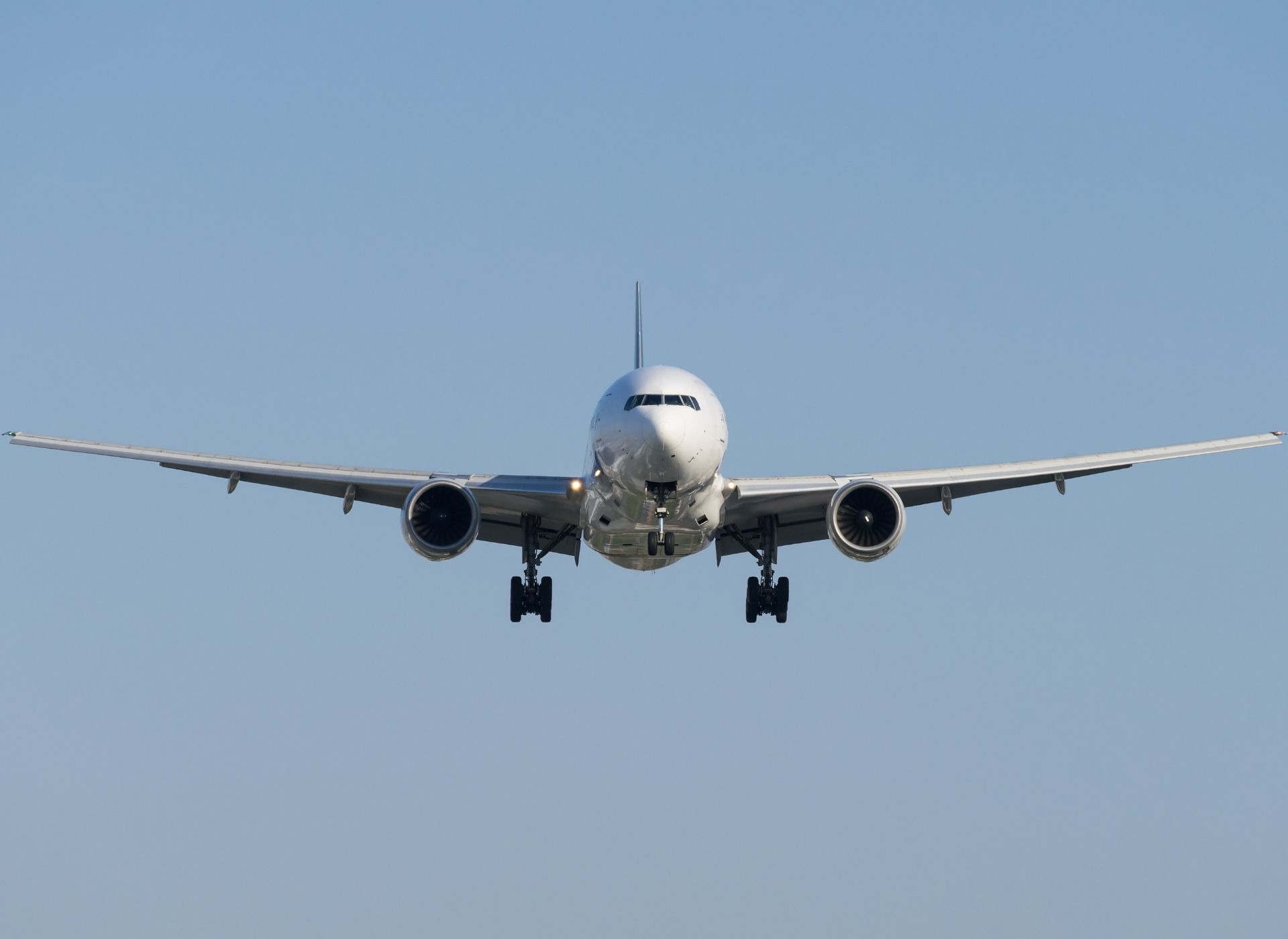
The Airbus A330-200F is the purpose-built freighter version of the A330, in service since 2010. This twin-engine widebody carries up to 70 tonnes of cargo, according to Airbus, with up to 22 pallets on the main deck and 26 LD3 containers in the lower hold. It can fly approximately 7,400 km with 64 tonnes on board.
Typical uses
For cargo aircraft charter, the A330-200F carries palletised freight on medium- and long-haul routes: general cargo, industrial and automotive parts, perishables, pharmaceuticals and humanitarian aid (see our cargo mission types). Its capacity sits between the Airbus A321F and the Boeing 777F.
Our approach
At Artheau Aviation, we assess the weight, dimensions and number of pallets in your shipment. We check that each item can pass through the side cargo door and fits within the permitted loading contours. We then identify the available variant, whether a purpose-built A330-200F or a converted A330, and compare smaller or larger aircraft when appropriate.
Payload
up to 70 t
Maximum payload stated by Airbus; approximately 64 t on the longest routes.
Pallets
22
2.44 × 3.18 m pallets loaded side by side on the main deck.
Range
≈ 7,400 km
With 64 t on board, according to Airbus; approximately 5,930 km with 69 t.
Cargo door
3.58 × 2.56 m
Main-deck side cargo door.
There is no fixed price for an A330-200F charter. With a full cargo charter, you reserve the entire aircraft for your mission, rather than paying a rate per kilogram. With a part charter, pricing depends on the space reserved on board.
The charter cost depends on the route and aircraft positioning, including the journey to the departure airport and its subsequent rotation. Fuel, airport charges and any technical fuel stop required on longer routes also affect the final quotation.
The number, height and weight of the pallets determine the payload that can actually be carried. Temperature-controlled cargo, dangerous goods, live animals and overflight or landing permits may involve additional charges.
To receive a price, request a quote and provide the weight, dimensions and number of packages. We contact A330 freighter operators and compare an Airbus A321F or Boeing 777F when suitable for your shipment. We seek the best balance of operational feasibility, timing and budget.
The A330-200F is a medium-sized widebody freighter. It is suited to shipments of 30 to 70 tonnes over medium or long distances, when a 777F or 747F would be oversized and an A321F too small. Four features make it particularly useful.
According to Airbus, the A330-200F is the only medium-sized freighter designed to accommodate 2.44 × 3.18 m (96 × 125 in) pallets side by side on the main deck. Cargo can therefore be prepared using standard widebody pallet formats.
The aircraft can prioritise payload or range: approximately 69 tonnes over 5,930 km, or 64 tonnes over 7,400 km, based on Airbus figures. The operator determines the appropriate balance for your route.
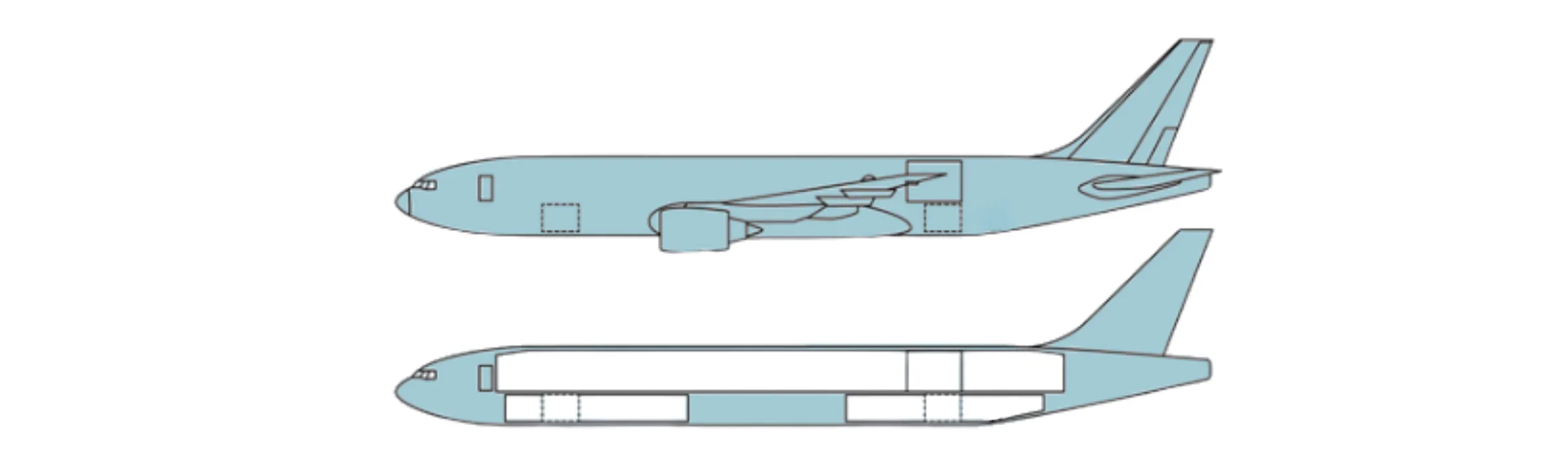
A passenger A330 sits slightly nose-down when parked. On the A330-200F, a fairing beneath the nose houses a modified nose landing gear, allowing the main deck to remain level and making pallet loading easier.
Its two engines, either Pratt & Whitney PW4000 or Rolls-Royce Trent 700 depending on the aircraft, can offer lower fuel consumption than a comparable four-engine freighter. For medium-sized shipments, the A330-200F avoids paying for unnecessary very-large-freighter capacity.
Like the 777F, the A330-200F has no nose cargo door: every item must pass through the 3.58 × 2.56 m side door. For larger pieces, we assess a Boeing 747-400F or Antonov AN-124. For shipments exceeding 70 tonnes, a Boeing 777F may be more appropriate.

With 64 t on board
≈ 7,400 km
With 64 tonnes on board, the A330-200F has a range of approximately 7,400 km, according to Airbus. With a 69-tonne payload, its range falls to approximately 5,930 km.
Indicative great-circle distances
As a guide, Paris–Dubai (approximately 5,240 km) is within the A330-200F’s range, even with a substantial payload. Paris–Johannesburg (approximately 8,740 km) exceeds that range and requires a technical fuel stop. These are direct distances; the actual flight path is often longer.
Range depends on the actual cargo weight, operating profile, weather, upper-level winds, departure temperature, runway length and mandatory fuel reserves. The operator calculates the payload that can be carried on each flight.
Before presenting a proposal, we confirm the available payload on your route, any required fuel stops, suitable airports and overflight permits with the operator.
Airbus builds the A330-200F as a dedicated freighter. EFW also converts passenger A330s into cargo aircraft, designated A330-200P2F and A330-300P2F. All three can serve similar charter requirements, although their capacities differ. We specify the variant offered in each proposal.
| A330-200F | A330-200P2F | A330-300P2F | |
|---|---|---|---|
| Origin | Purpose-built, in service since 2010 | Converted A330-200 (EFW) | Converted A330-300 (EFW) |
| Maximum payload | up to 70 t | up to 60 t | up to 62 t |
| Cargo volume | — | ≈ 453 m³ | ≈ 526 m³ |
| Main deck | up to 22 pallets, 2.44 × 3.18 m | — | up to 26 containers |
| Lower deck | 26 LD3s or 8 pallets + 2 LD3s | — | 32 LD3s |
| Cargo door | side, 3.58 × 2.56 m | side, 3.58 × 2.57 m | side, 3.58 × 2.57 m |
| Range | ≈ 7,400 km with 64 t | up to ≈ 7,780 km (max.) | up to ≈ 6,850 km (max.) |
| Length / wingspan | 58.82 m / 60.30 m | — | — |
Sources: Airbus, A330-200F; EFW, A330P2F. “—” means the source does not publish a value. Figures are indicative and vary by aircraft, operator and route.

Side cargo door
3.58 × 2.56 m
Main deck
up to 22 pallets · 2.44 × 3.18 m, side by side
Lower deck
26 LD3 containers · or 8 pallets and 2 LD3s
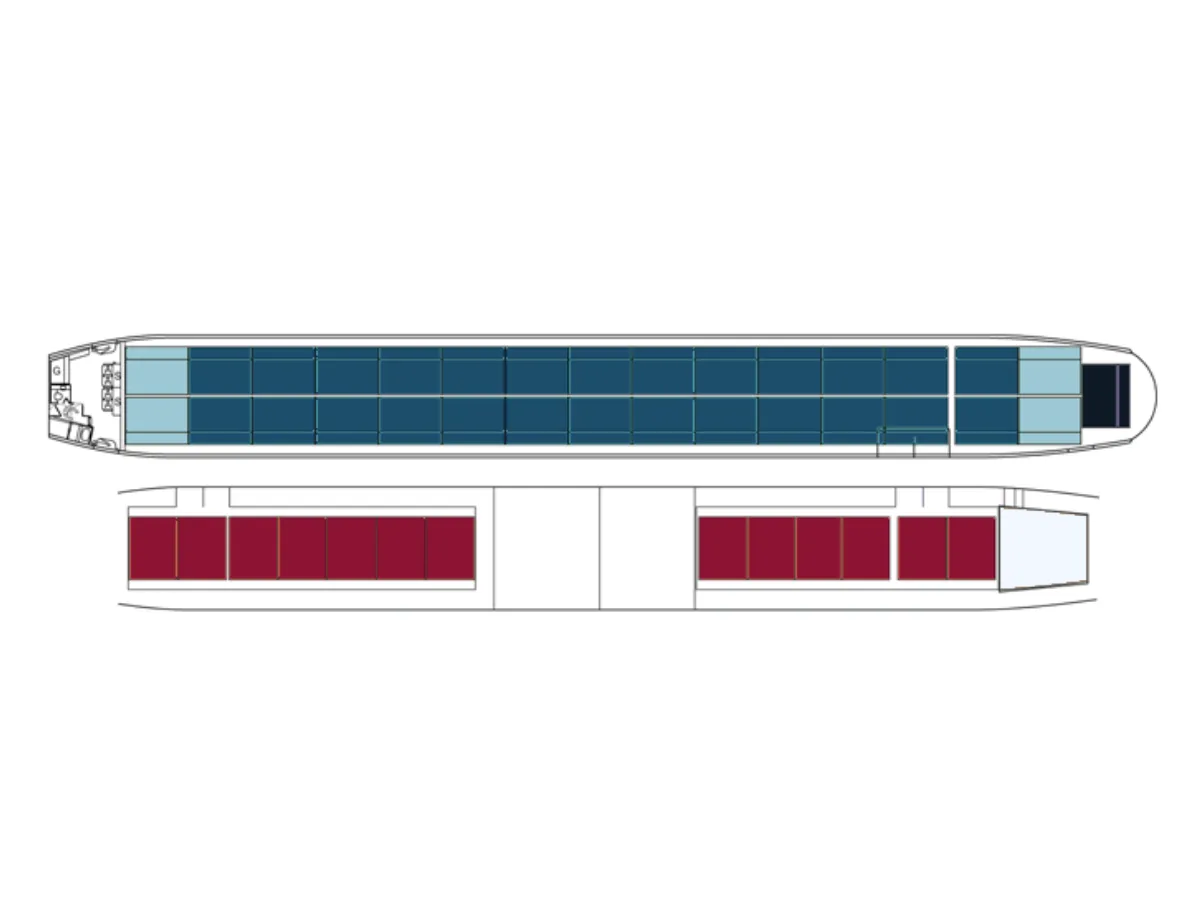
Main deck: up to 22 pallets measuring 2.44 × 3.18 m (96 × 125 in), arranged side by side. Lower deck: 26 LD3 containers, or 8 pallets and 2 LD3 containers, depending on the operator’s configuration.
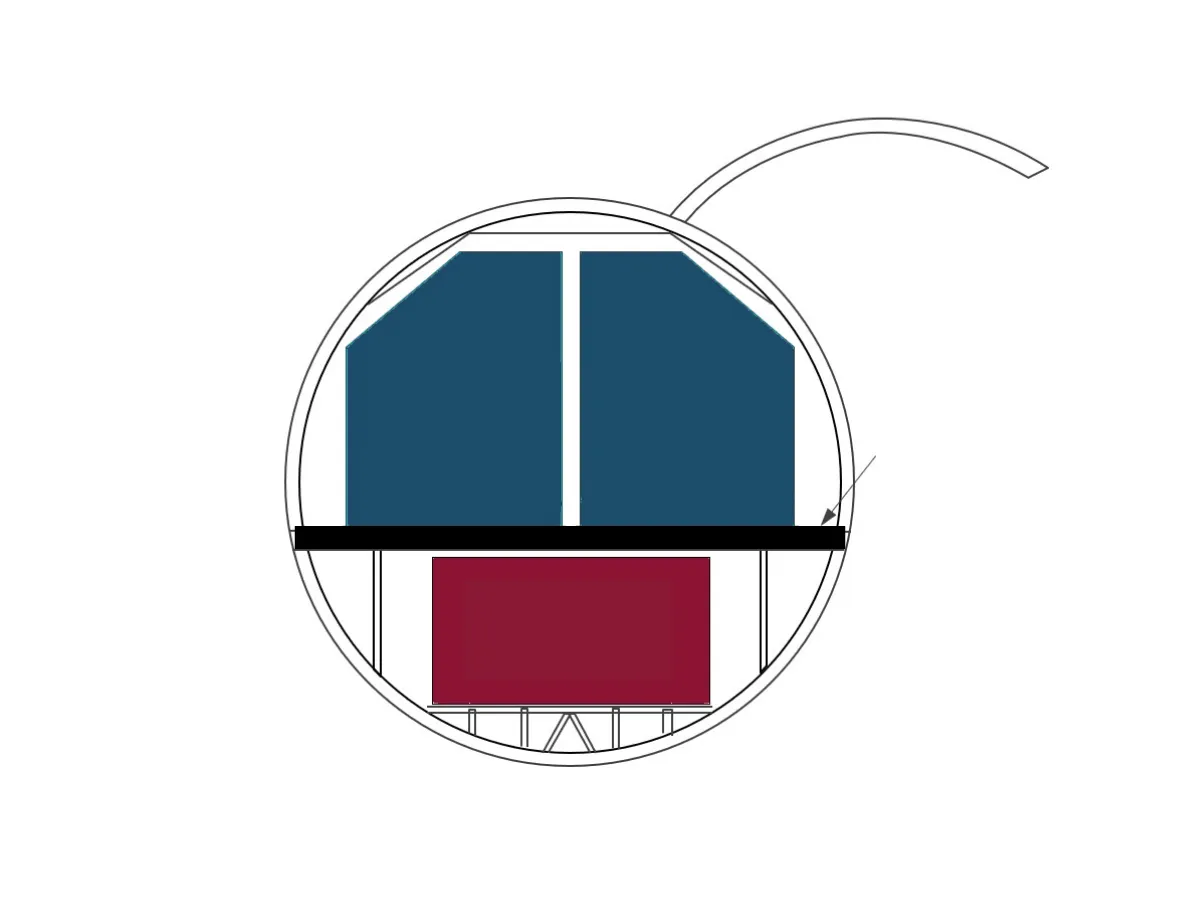
The A330 fuselage accommodates two pallets side by side on the main deck, with tapered upper contours following the fuselage shape. Cargo height is limited by the 2.56 m door and the loading contour at each position.
Generic, indicative diagrams, not to scale. A330-200F dimensions according to Airbus; maximum individual package dimensions depend on the operator’s loading tables.
The A330-200F primarily carries palletised or containerised freight, including general goods, industrial and automotive parts, equipment, perishables and pharmaceuticals. Temperature-controlled shipments and live animals depend on the operator’s equipment and procedures.
For medium-sized shipments, it can offer a good balance between capacity and cost when an A321F is too small and a 777F would be oversized.
Every item must pass through the 3.58 × 2.56 m side cargo door and fit within the contour of its loading position. We assess feasibility with the operator using each item’s three dimensions and weight.
Heavy items with concentrated loads must remain within floor-loading limits, sometimes requiring load-spreading plates. Dangerous goods must comply with IATA Dangerous Goods Regulations (DGR) and be declared when requesting a quote (see our dangerous goods cargo services).
A core use of the aircraft. We check the number of pallets and the available payload for your route.
Direct flights over medium distances. We check cold-chain arrangements and arrival handling with the operator.
Medium cargo capacity and good range. We check runway suitability, ground handling and arrival permits.
Possible depending on the operator and species. Transport conditions must be confirmed in advance.
Possible if the item fits through the side door. We check dimensions and floor-loading limits against the drawings.
A Boeing 747-400F, with its nose door, or an Antonov AN-124 is generally required.
We consider the A330-200F for shipments of 30 to 70 tonnes on medium- or long-haul routes when the volume does not justify a 777F or 747F. We assess pallet numbers, heights and weights, not just total tonnage.
We identify the proposed variant, whether a purpose-built A330-200F or converted A330, its maximum payload and the payload available on your route. We also verify the operator and its Air Operator Certificate (AOC), in line with our safety commitment.
We check departure and arrival airports, slots, cargo handling, overflight and landing rights, and any temperature-control or security requirements. Aircraft positioning is included in our initial estimate.
For heavier cargo or longer distances, we assess a Boeing 777F. For lighter shipments over shorter routes, an Airbus A321F or part charter may be sufficient.
An offshore oil platform off the coast of Nigeria had been shut down by a technical failure. A freight forwarder working for oil companies asked us to urgently fly around 45 tonnes of metal parts, equipment and cables from Europe. We organised an Airbus A330-200F flight from Paris-Vatry to Lagos, then followed the sea transport to the platform.
With around 45 tonnes of cargo, including one large main part, the shipment required a widebody without justifying the capacity of a 777F. The A330-200F offered the door and main-deck dimensions needed to load the part and the pallets.
Vatry and Lagos are about 4,700 km apart in a straight line, a distance compatible with the A330-200F's range at this payload. Given the urgency, air freight was the only option fast enough to bring the platform back into service.
The main part did not fit on a standard pallet. With the client, we assembled several pallets to support and secure it, then validated this build-up with the operator.
The other pallets of equipment were placed at the front and rear of the aircraft, in line with the loading plan and the aircraft's centre of gravity.
We checked all the shipping documents with the freight forwarder before sending them to the airline, making sure they were complete and accurate. Incomplete documents can prevent the aircraft from departing.
We also prepared the customs declarations and filed the overflight and landing permit requests, so that the aircraft could depart as soon as the cargo was ready.
In Vatry, we supervised the palletisation and loading of the aircraft with the client, then monitored the flight through to its arrival in Lagos.
We then followed the sea transport of the parts from Lagos to the platform, located off the south of the country, through to delivery.
This mission shows our role as conductor on an urgent cargo charter: choosing the right aircraft, securing an out-of-format part, preparing documents, customs and permits, then following the cargo to its final destination, beyond the arrival airport.
Other missions carried out by Artheau Aviation on the Airbus A330 freighter
Our air freight department organises dedicated cargo flights, as a full charter or part charter, in France, Europe and internationally. Our role as a broker: find the right aircraft for your shipment, confirm that the flight is feasible and coordinate everyone involved through to delivery.
We compare available freighters by weight, dimensions and loading doors, working only with AOC-holding airlines selected in line with our safety commitment. We also check the airports: runway, loading equipment, handling and opening hours.
We coordinate overflight and landing permit requests with the operator; requirements vary by country, type of cargo and type of flight.
For dangerous goods, we check with the operator that the shipment can be accepted under the IATA Dangerous Goods Regulations (DGR). We then review all flight documents with you and pass them on to the airline. We make sure they are complete and accurate, as a missing or incorrect document can keep the aircraft on the ground. Classification, packaging, marking and labelling remain the shipper's responsibility; some materials, such as radioactive materials, are subject to additional limitations. On every operation, we act as the conductor between you, the operator and the airports.
We liaise between the operator, the airports, the handling agents and your freight forwarder, with whom we coordinate customs formalities. The flight is tracked in real time with the operator's operations control centre, and you keep a single point of contact throughout.
Provide the number of packages, their dimensions, weight and packaging, the nature of the goods, the route and travel dates. Specify any temperature-control requirements or dangerous goods.
We confirm door clearance, the loading plan and available payload on your route with the operator. We then present the available options, including full or part charter and an alternative aircraft where appropriate.
Once the charter is confirmed, we coordinate each stage with the operator, airports, freight forwarder and ground handlers. We review the flight documents with you before submitting them to the airline, then monitor the flight through to delivery.
There is no fixed price. For a full charter, the rate covers the entire aircraft and depends on the route, positioning, fuel, airport charges, ground handling and permits. For a part charter, it depends on the space reserved. We provide a tailored quote for every request.
Up to 70 tonnes according to Airbus, and approximately 64 tonnes on the longest routes. The actual payload depends on the aircraft, route and fuel requirements.
Up to 22 pallets measuring 2.44 × 3.18 m, arranged side by side on the main deck, plus 26 LD3 containers in the lower hold, or 8 pallets and 2 LD3 containers, depending on the operator’s configuration.
The main-deck side cargo door measures 3.58 m wide by 2.56 m high. The A330-200F has no nose door. For larger items, we consider a Boeing 747-400F or Antonov AN-124.
Approximately 7,400 km with 64 tonnes on board, according to Airbus, or around 5,930 km with 69 tonnes. Beyond these distances, a technical fuel stop or reduced payload may be necessary; we check this when preparing your quotation.
The A330-200F is purpose-built as a freighter, whereas the A330-200P2F and A330-300P2F are passenger aircraft converted by EFW. Their capacities are broadly similar, although the longer A330-300P2F offers more volume. We confirm the proposed variant and its specifications before booking.
The 777F carries up to 107 tonnes and offers greater range at maximum payload. The smaller A330-200F is better suited to shipments of 30 to 70 tonnes, avoiding the cost of unused capacity on a larger freighter.
Provide the origin, destination, cargo-ready date, number of packages, their dimensions and weights, packaging and nature of the goods. Request your quote or read our air freight FAQ.
From private jet charters to commercial group flights and dedicated cargo operations, we deliver tailored air solutions for every mission, anywhere in the world.