Air charter broker: who does what between broker, bperator, and airline?

Departure airport

Suggestions
Thank you! Your submission has been received!
Oops! Something went wrong while submitting the form.

Arrival airport

Suggestions
Thank you! Your submission has been received!
Oops! Something went wrong while submitting the form.

Choose your date

Nᵒ of passengers

Ages 18 or above
Ages 1-12
Thank you! Your submission has been received!
Oops! Something went wrong while submitting the form.
\

Your freight

In tons
In m3
Thank you! Your submission has been received!
Oops! Something went wrong while submitting the form.
01. Your request
Outbound
Edit
From
Paris LBG
To
Jakarta
Date
16/10/2025
Passengers
4
Weight / Volume
4
Inbound
Edit
From
Jakarta
To
Paris LBG
Date
23/10/2025
Passengers
4
Weight / Volume
4
02. Contact information
Thank you! Your submission has been received!
Oops! Something went wrong while submitting the form.
Charter your flight
in a few clicks.
Private jet
From 1 to 19 passengers and corporate jet
Airliner
From 20 passengers and above
Cargo aircraft
For your freight logistics
What's app
What is an air charter broker, and how is it different from an airline or an aircraft operator? A clear, practical explanation to understand who does what in air charter.

What problem are travelers and companies really trying to solve?

When people look for a private flight or a charter aircraft, they often face the same confusion. They do not know who they are actually dealing with. Is it an airline? An aircraft owner? A broker?
This lack of clarity can lead to poor decisions, unrealistic expectations, or operational risks.

The goal of this article is simple. Explain, in clear terms, the role of an air charter broker and how it differs from an operator or an airline. By the end, you will know exactly who does what, and why the distinction matters.

What is an air charter broker?

An air charter broker is an independent aviation professional who organizes flights on behalf of clients.


The broker does not own aircraft and does not operate flights.

Instead, the broker acts as a market expert. Its role is to analyze the mission, identify the most suitable aircraft, negotiate with certified operators, and manage the entire process from request to landing.

In practical terms, an air charter broker works like an architect of air transport. The client expresses a need. The broker designs the best possible solution using the global charter market.

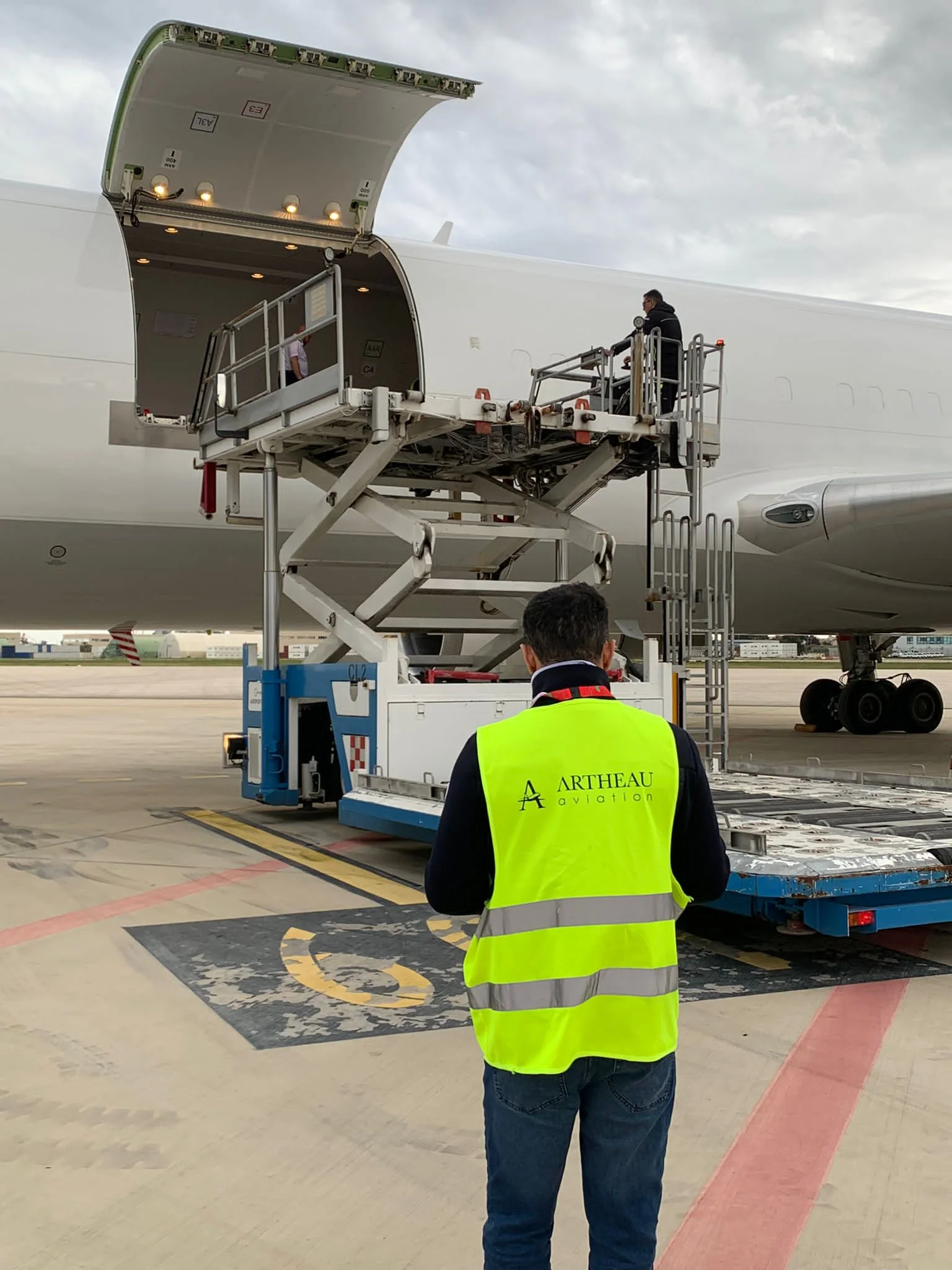
Broker company like Artheau Aviation operate across business aviation, commercial aviation, sports flights, and air freight, coordinating complex missions that require both technical and operational expertise.

Air charter broker vs aircraft operator vs airline: clear roles explained

Confusion between broker, operator, and airline is very common in air charter. Yet each role is clearly defined, both operationally and legally. Understanding these distinctions helps clients make informed decisions and avoid misunderstandings.

The aircraft operator


The aircraft operator is the entity that physically operates the flight.
It owns or manages the aircraft, employs the flight crew, maintains the aircraft, and holds the required Air Operator Certificate issued by the aviation authority.

From a regulatory standpoint, the operator carries full responsibility for flight safety and legal compliance. This includes crew duty limitations, aircraft maintenance status, operational manuals, insurance coverage, airport approvals, and adherence to international aviation regulations.

If a flight is delayed, canceled, or restricted for safety or compliance reasons, the final decision always belongs to the operator. No broker or client can override this authority.

In short, the operator flies the aircraft and assumes all operational risk.

The airline


An airline is a specific type of operator with a commercial model built around scheduled or semi-scheduled flights.
Airlines sell individual seats or predefined aircraft capacity on fixed routes, with standardized pricing and services.

In charter contexts, airlines may also operate full-aircraft charters for tour operators, corporate groups, or major events. However, their flexibility is limited by their fleet composition, network structure, and internal scheduling priorities.

Airlines are highly efficient for mass transport on established routes, but they are not designed to customize solutions around unique constraints, last-minute changes, or non-standard airports.

The air charter broker


The air charter broker operates at a completely different level.


The broker does not own aircraft and does not fly missions. Its role is to represent the client and design the optimal solution within the charter market.

A broker starts by analyzing the mission: number of passengers, routing, dates, flexibility, operational constraints, and budget objectives. Based on this analysis, it identifies suitable aircraft types and approaches multiple certified operators.

The broker then compares offers not only on price, but also on aircraft configuration, operational reliability, crew experience, airport access, and risk factors such as tight rotations or marginal duty times.

Crucially, the broker remains independent. It has no incentive to favor one aircraft or operator over another. This neutrality allows objective recommendations based solely on mission suitability.

The broker also acts as a translator between aviation complexity and client expectations. It explains technical constraints, anticipates operational risks, and ensures that what is sold on paper can realistically be delivered in the air.


Why using an air charter broker creates real value?

At first glance, chartering an aircraft may appear straightforward. In reality, it is a highly dynamic market with significant operational, financial, and regulatory variables. This is where the broker’s value becomes tangible.

Access to the full charter market

A broker is not limited to a single fleet or operator.
It has visibility over a wide range of aircraft worldwide, including turboprops, light and long-range jets, regional airliners, widebody aircraft, and dedicated cargo planes.

This broad access allows precise aircraft matching. The goal is not to sell the biggest or most expensive aircraft, but the most efficient one for the mission. In many cases, the right aircraft choice can significantly reduce costs while improving operational reliability.

Operational risk anticipation


Many charter issues arise before the aircraft even takes off.


Airport curfews, runway performance, slot availability, crew legality, ground handling capabilities, and overflight permits all influence whether a mission can be executed as planned.

An experienced broker identifies these constraints early, before contracts are signed. This reduces the risk of last-minute changes, operational cancellations, or hidden costs that appear after confirmation.

Cost transparency and benchmarking

Charter pricing is not fixed.


The same aircraft type can be quoted at very different prices depending on positioning flights, market demand, fuel contracts, and operator strategy.

A broker benchmarks offers across the market and explains why prices differ. This transparency allows clients to understand what they are paying for and to make rational trade-offs between cost, flexibility, and risk.

Mission-specific expertise


Not all charter flights are alike.


Transporting executives on a tight schedule, flying a sports team with oversized equipment, organizing a corporate event charter, or moving urgent freight all require different operational setups.

A broker adapts the solution to the mission’s priorities. This includes aircraft configuration, cabin layout, baggage capacity, turnaround time, and contingency planning.

Long-term strategic support


Beyond individual flights, brokers often support clients over time.


This may include managing recurring charter programs, optimizing seasonal operations, or advising clients whose charter usage is increasing toward aircraft ownership or long-term management solutions.

In this context, the broker becomes a strategic aviation partner rather than a transactional intermediary.

Choosing clarity in air charter decisions

Understanding who does what in air charter is the first step toward safer, smarter, and more efficient flights. If your mission requires flexibility, neutrality, and expert coordination, working with an experienced air charter broker is often the most reliable approach.

Our broker team is at your disposal for any charter request : contact@flyaa.eu

FAQ

Does using an air charter broker cost more?

Not necessarily. In many cases, brokers secure equal or better pricing thanks to market knowledge and negotiation leverage. More importantly, they help avoid costly operational mistakes.

Can I contact an operator directly instead of a broker?

Yes. However, you will only see that operator’s fleet and availability.A broker provides market-wide comparison and independent advice.

When is an air charter broker especially useful?

Brokers are valuable for simple and complex missions, large groups, international operations, time-critical flights, or when cost control and reliability are essential. You can contact our team to get your quote.

Recommended for you

Read our other news, articles and updates.