What is air charter?
Air charter is the hire of an entire aircraft, with its crew, for a flight organised around one client's requirements. Instead of buying seats on a scheduled airline, the client defines the route, date, schedule and capacity, and the flight is operated for that mission only. An air charter can involve a private jet, a turboprop, a helicopter, a commercial airliner or a cargo aircraft.
The difference with a scheduled flight lies in how the transport is organised. On a scheduled service, the airline sets destinations, departure times, frequencies and capacity in advance, and passengers choose from what already exists. With air charter, the process starts from the client's requirements: departure and arrival airports, date and preferred schedule, number of passengers or cargo characteristics, baggage, special equipment and services. An air charter broker then searches the market for a suitable aircraft and air operator able to meet those requirements.
Chartering an aircraft is therefore not simply booking every seat. It means securing aircraft capacity and organising its use around a defined mission, whether that mission is a business trip for four executives, a flight for 150 employees, a sports team's away match or an urgent cargo shipment.
How does air charter work?
An air charter involves three parties. The client defines the mission. The air operator is responsible for operating the flight with the aircraft and crew, and must hold the licences and approvals required for the operation, including an Air Operator Certificate (AOC) where applicable. The air charter broker works with the client: it analyses the requirements, consults operators, compares proposals and coordinates the charter.
In practice, the process follows four steps: define the mission, source the right aircraft and operator, confirm the quote and services, then prepare and follow the flight through to departure. Each step is detailed in our guide on how to charter an aircraft, step by step, and the main cost items are explained in our guide to charter flight prices.

When is air charter the right choice?
Air charter becomes relevant when a journey involves constraints that scheduled airline networks cannot easily meet.
- No suitable direct flight: a scheduled journey may require a connection, extra ground transport or arriving the day before. A charter makes it possible to assess a direct flight between airports compatible with the aircraft.
- Fixed timings: a company event, a sports competition or an official delegation may need to arrive and leave at precise times. The charter programme is built around them, subject to aircraft availability, airport opening hours, slots and permits.
- Group travel: moving 100 or 150 people on scheduled services often means splitting them across several flights. A group charter can keep passengers together on one dedicated programme.
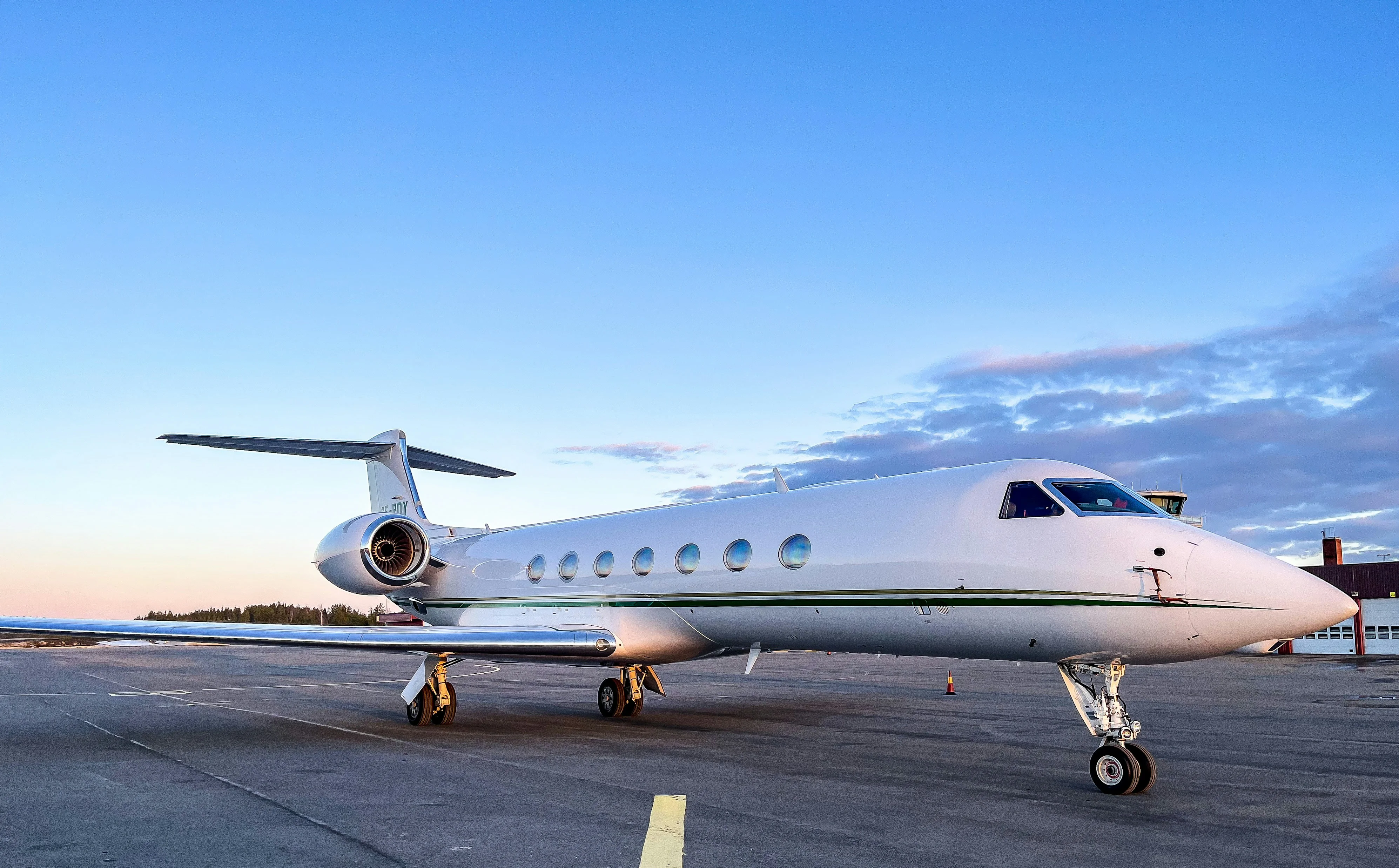
- Business travel: a few passengers may charter a private jet to save time, use an airport closer to their destination, complete several sectors in a day or travel more privately.
- Air cargo: urgent, heavy or outsized shipments, or destinations with little scheduled capacity, may require a dedicated cargo aircraft.
Air charter is not always the most suitable option, however. When a scheduled flight, a train or a part-charter meets the requirement more simply, that alternative can be better. We explain these cases in when air charter is not necessarily the most suitable solution.


What are the advantages of air charter?
The main advantage of air charter is that the flight is built around the mission, rather than the mission being adapted to an existing airline schedule.
- Control over the schedule: departure times can be organised around a meeting, an event, a competition or a logistics deadline.
- Choice of route and airports: when the aircraft, airports, permits and operating conditions allow it, the flight can link the required airports directly, sometimes using a smaller airport closer to the final destination.
- An aircraft matched to the mission: depending on passengers, distance and baggage, the broker can look for a private jet, a turboprop, a regional aircraft or an airliner. For around 50 passengers, a regional aircraft may be considered; for around 150 passengers, an Airbus A320 or Boeing 737 family aircraft may be suitable, depending on the configuration and mission.
- Coordinated services: catering, baggage, passenger assistance, ground transfers or sports equipment can be organised around the flight, subject to the operator's approval, the aircraft's capabilities and airport procedures.
- Direct cargo transport: a dedicated freighter can avoid several stages and intermediate handling, which matters for time-critical or outsized cargo.
At Artheau Aviation, air charter covers four specialist areas: Private Jet Charter, Group Charter Flights, Sports Team Charter Flights and Air Cargo Charter. The starting point is always the same: understanding the mission before sourcing the aircraft.
Talk to an air charter specialist
If you are considering an air charter flight, defining the mission correctly is the first step. Aircraft selection, routing, and cost optimization depend on expert analysis. Contact Artheau Aviation to evaluate the most efficient air charter solution for your needs.
FAQ
A scheduled flight follows routes, times and capacity set in advance by the airline, and passengers buy individual seats. A charter flight is organised for one client or group: the aircraft is hired for the mission, and the route, schedule and capacity are defined around the client's requirements.
Private jet flights are one segment of air charter. Air charter is broader: it also includes commercial airliners chartered for groups and cargo aircraft chartered for freight.
Charter flights are operated by air operators that must hold the licences and approvals required for the operation and comply with the aviation regulations applicable to them. Depending on the type of commercial operation and jurisdiction, this includes an Air Operator Certificate (AOC). As an air charter broker, Artheau Aviation reviews the operator and the conditions of the proposed operation before presenting a solution to the client.
There is no universal minimum. A private jet can be chartered for one or a few passengers, while regional and commercial aircraft can carry dozens or hundreds of people. The right solution depends on passenger numbers, route, baggage, budget and aircraft availability.