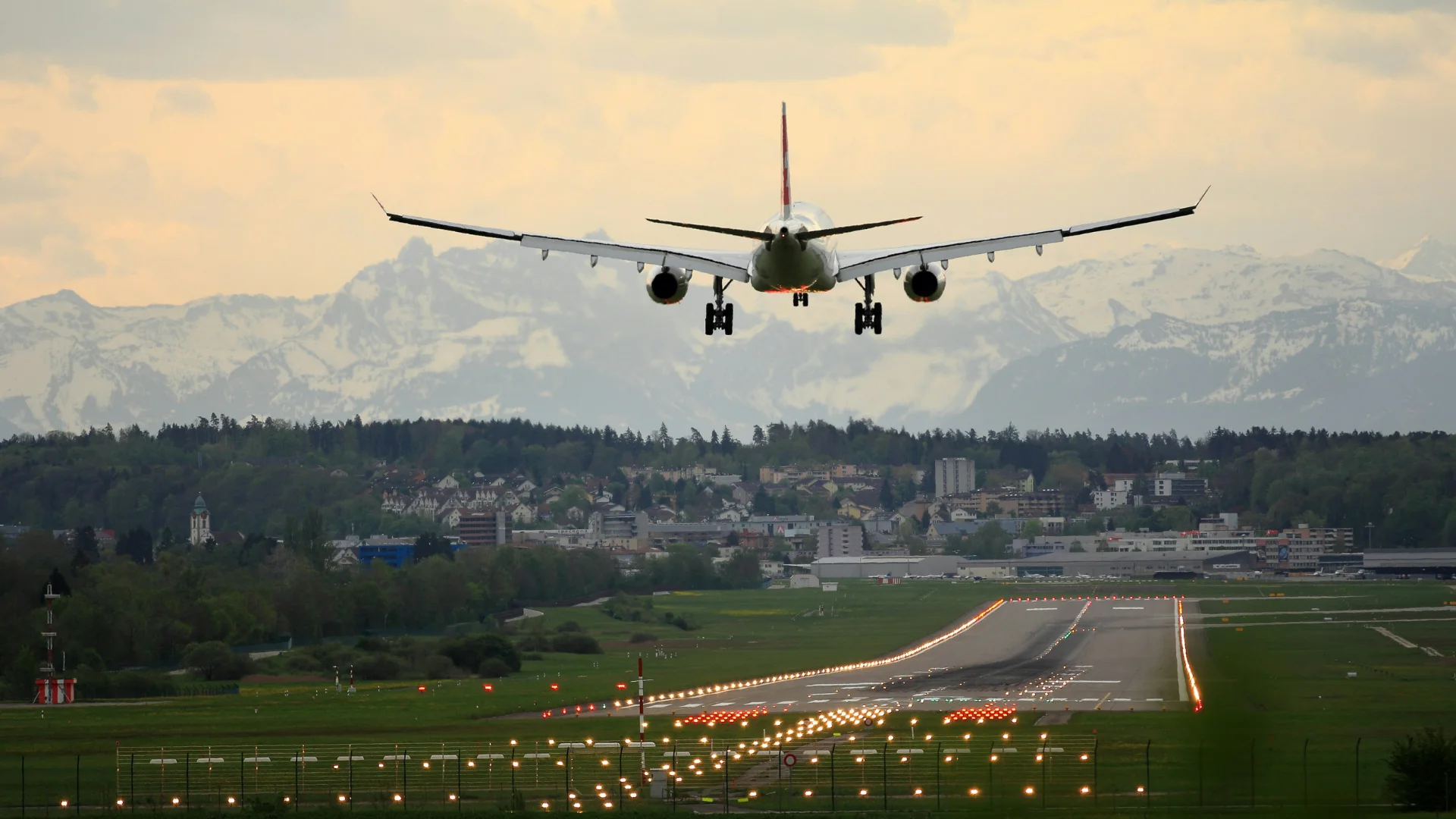
A production line immobilized while awaiting a vital technical component. A European hospital facing a critical shortage of medical devices. A disaster area requiring immediate delivery of emergency equipment. These situations share a common denominator: time becomes the decisive variable.
Commercial cargo efficiently handles planned flows. However, its structural constraints—scheduled rotations, shared capacity among multiple shippers, mandatory routing through consolidation hubs—make any adaptation to critical unforeseen events impossible. When every hour represents measurable operational cost or identified health risk, urgent aircraft cargo charter becomes the only relevant logistics response.
An experienced cargo broker then intervenes as orchestrator: mobilizing the appropriate aircraft, structuring regulatory documentation, coordinating flight authorizations, and guaranteeing end-to-end traceability. This coordination transforms a potentially paralyzing emergency into a controlled operation, thereby securing the continuity of critical activities.
When logistics reactivity becomes mission-critical
Specific constraints of air freight in emergency situations
Urgent air freight never limits itself to booking cargo space. Each critical operation imposes technical, documentary, and regulatory constraints that far exceed the scope of standard transport.
Dangerous goods require precise IATA classification, approved packaging, and complete DGR documentation. Oversized equipment involves rigorous weight-and-balance calculations and sometimes special flight authorizations. Temperature-sensitive products demand a documented cold chain with validated temperature recorders. Critical industrial parts often require custom conditioning to prevent any damage during handling phases.
Technical complexities are compounded by administrative constraints: urgent air waybill, certificates of origin, export licenses depending on destinations, overflight authorizations for certain geographical zones. A well-orchestrated reactive cargo charter integrates all these parameters from the preparation phase, thus avoiding any blockage at the time of actual departure. This anticipation represents the fundamental difference between a successful operation and damaging delays. The broker's ability to manage these parallel workflows determines whether your cargo moves within hours or faces costly ground delays.

How cargo charter works in emergency mode
Critical cargo charter relies on a structured methodology in several interdependent stages, each conditioning the overall success of the operation.
Initial demand qualification
Everything begins with precise needs analysis: exact nature of the goods, dimensions, weight, temporal criticality level, identified regulatory constraints. This qualification immediately eliminates unsuitable options and directs the search toward relevant aircraft and operators. An experienced air cargo broker systematically asks essential technical questions: does the cargo require particular certification? Are there carriage restrictions depending on the destination? Does the announced deadline include customs formalities? Understanding whether your shipment constitutes dangerous goods, oversized freight, or temperature-controlled cargo fundamentally shapes the entire operational framework.
Aircraft and operator selection
Once the need is qualified, the broker identifies the suitable aircraft. A Boeing 737-400F will suit medium volume with side loading capability. An Antonov An-124 becomes necessary for oversized equipment requiring front loading through nose doors. An ATR 72-200F may suffice for regional connections with limited infrastructure where larger jets cannot operate. The choice also integrates operator certifications: capability to transport dangerous goods under IATA regulations, medical approvals for certain pharmaceutical products, specific authorizations depending on geographical zones served.
This selection never relies solely on immediate availability. It also cross-references the operator's historical reliability, verifiable regulatory compliance, and demonstrated ability to document each stage of the operation comprehensively. Critical industrial freight tolerates no approximation on these criteria. The broker evaluates maintenance records, safety performance, and operational track record to ensure your time-sensitive cargo travels with a proven operator.
Documentary and regulatory orchestration
Documentation often represents the limiting factor in an urgent operation. The air waybill must be established with absolute precision, mentioning all elements necessary for shipment identification and customs clearance. Dangerous goods impose complete DGR declaration, co-signed by the shipper and validated by the operator, with each substance properly classified and packaged according to international standards. Certain destinations require overflight authorizations obtained from national aeronautical authorities, sometimes within very constrained deadlines that demand immediate action.
A broker structuring these procedures in parallel—not sequentially—can gain several hours on an operation where every minute counts. This orchestration also includes coordination with ground teams: handlers trained for specific equipment types, customs agents notified in advance with pre-cleared documentation, specific handling equipment reserved at departure and arrival airports. For pharmaceutical shipments requiring cold chain integrity, this includes pre-positioning refrigerated transport at both ends and securing temperature-controlled storage facilities if any ground delay occurs.
The regulatory complexity intensifies with cross-border movements. Export licenses, import permits, veterinary certificates for biological materials, and dual-use goods authorizations must all align perfectly. The broker navigates these requirements simultaneously, leveraging established relationships with customs authorities and regulatory bodies to accelerate approvals that might otherwise require days or weeks.
Operational execution and real-time tracking
Once the aircraft is positioned and documentation finalized, the operation enters execution phase. Real-time tracking then becomes essential: confirmation of actual takeoff, transmission of flight information, coordination with receiving teams at destination, and continuous monitoring of any weather or airspace factors that might require route adjustments. A humanitarian cargo aircraft landing in a zone with limited infrastructure sometimes requires last-minute adjustments to unloading means or reception procedures, demanding rapid decision-making based on current ground conditions.
The broker maintains an active communication line with all stakeholders: shipper, air operator, ground agents, final consignee. This continuous visibility allows anticipating any deviation and immediately proposing alternative solutions if necessary. When out-of-gauge air freight imposes particular constraints such as specialized loading equipment or escort vehicles for ground transport, this reactivity makes all the difference between successful delivery and compromised operation. The broker's operations center monitors the shipment continuously, ready to deploy contingency plans if any link in the logistics chain encounters difficulty.
Closure and capitalization
At the operation's conclusion, final documentation is consolidated: proof of delivery with recipient signature and timestamp, certificates of compliance if required by regulatory frameworks, temperature reports for temperature-sensitive products showing unbroken cold chain integrity. This complete traceability serves not only to validate regulatory compliance for audit purposes, but also to capitalize on experience for future operations.
Each tailored cargo charter generates exploitable lessons: actual observed deadlines compared to estimates, performance of mobilized service providers against contractual commitments, identified improvement points for similar future shipments. This systematic knowledge capture transforms each urgent operation into institutional learning, progressively refining the broker's ability to execute increasingly complex missions with greater reliability.


Difference between commercial cargo and charter cargo in critical situations
Understanding the fundamental distinction between commercial cargo and charter cargo allows precisely identifying when chartering becomes the only viable option for time-critical shipments.
Temporal and geographical flexibility
Commercial cargo operates on predefined rotations, optimized to make regular line operations profitable through consolidation of multiple shippers' freight. A Paris-Shanghai cargo flight departs at fixed schedule, with possible technical stops depending on aircraft used and payload configuration. This predictability suits planned flows perfectly, enabling businesses to optimize inventory and supply chain costs through reliable scheduled service.
However, this structure becomes incompatible with an emergency requiring departure within 12 hours to a destination not served daily or requiring routing through multiple hubs. Conversely, express freight charter offers total adaptation: the aircraft takes off as soon as preparation is finalized, from the airport closest to the pickup point, proceeding directly to the final destination without intermediate transit, consolidation delays, or competing cargo priorities.
This geographical flexibility eliminates consolidation delays and risks linked to multiple connections where cargo might be offloaded to accommodate higher-priority shipments. For a vital spare part immobilizing a production line generating significant hourly revenue, this time gain translates directly into avoided costs that typically far exceed the charter premium. The ability to position aircraft at secondary airports closer to both origin and destination further reduces total door-to-door transit time.
Dedicated versus shared capacity
On a commercial cargo flight, available capacity depends on already confirmed bookings and the airline's priority hierarchy for different cargo categories. An urgent pallet may be refused if the aircraft shows full capacity, or accepted but positioned on standby for the next available flight, introducing uncertainty incompatible with critical deadlines. During peak seasons or on high-demand routes, even confirmed bookings may face bumping if higher-revenue cargo becomes available.
Round-the-clock cargo charter guarantees entirely dedicated capacity. The shipper commands the entire cargo volume, can optimize loading according to specific operational constraints, and faces no competing priorities from other shippers. This exclusivity secures the operation while also imposing increased responsibility for preparation quality: any non-compliant cargo blocks the entire operation rather than simply being offloaded while other shipments proceed.
The dedicated aircraft also enables specialized configurations impossible in commercial operations: removing seats for additional cargo volume, installing specialized securing systems for sensitive equipment, or configuring environmental controls for specific product requirements. This customization extends to loading procedures, with the shipper's technical team able to supervise every aspect of cargo handling according to manufacturer specifications.
Control of technical constraints
Commercial cargo standardizes procedures to absorb large volumes with maximum efficiency and cost-effectiveness. This standardization however imposes strict limits: maximum pallet dimensions constrained by aircraft door sizes and cargo compartment configurations, capped unit weight based on floor loading limits, restrictions on certain dangerous goods categories based on aircraft certification and crew training. Industrial equipment exceeding these thresholds simply cannot be accepted, regardless of urgency or willingness to pay premium rates.
Urgent spare parts cargo charter, or any other freight requiring technical adaptations, allows selecting an aircraft whose characteristics exactly match the need. Front loading capability for bulky machine tools that cannot be broken down, reinforced flooring for heavy equipment exceeding standard floor loading limits, pressurized and climate-controlled holds for pharmaceutical products requiring specific temperature and humidity ranges: each constraint finds an adapted response.
This technical customization often represents the only solution for goods impossible to split or repackage. A single-piece industrial component weighing 15 tons and measuring 8 meters in length cannot be accommodated on commercial cargo flights regardless of pricing. The charter market provides access to specialized freighters designed specifically for such out-of-gauge cargo, with the broker matching equipment specifications to aircraft capabilities with engineering precision.
Traceability and accountability
On a commercial cargo chain involving several intermediaries—freight forwarder, consolidator, airline, destination agent—responsibility dilutes at each handoff point. In case of incident or delay, identifying the responsible party and obtaining compensation becomes a complex administrative process involving multiple jurisdictions and contractual relationships. Each intermediary typically limits liability to narrow contractual terms, leaving the shipper to navigate competing claims and limited recourse.
Charter structured through a cargo broker centralizes accountability. The broker directly answers for the entire operation: operator selection, documentary compliance, respect for announced deadlines, end-to-end traceability with single-point responsibility. This unified accountability considerably simplifies management, particularly valuable in contexts where administrative reactivity conditions operational success and where delays may trigger substantial contractual penalties.
The broker's reputation depends entirely on successful execution, creating strong incentive alignment with the shipper's interests. Rather than optimizing for network efficiency across thousands of shipments, the charter broker focuses exclusively on your specific operation, with commercial success directly tied to meeting your precise requirements. This accountability structure proves especially critical for mission-critical shipments where failure costs vastly exceed transportation fees.
Profitability depending on context
Cargo charter represents higher investment than commercial cargo rates for equivalent volume, reflecting dedicated aircraft costs not amortized across multiple shippers. This rate differential however becomes negligible when integrating indirect costs of prolonged immobilization: production losses from halted manufacturing lines, contractual penalties for delayed project delivery, reputational impact from service failures, or in medical contexts, patient outcomes affected by equipment shortages.
For automotive manufacturing where assembly lines generate millions in daily output, chartering emergency cargo aircraft for a critical component represents economically rational decision-making. The charter cost, typically ranging from tens to hundreds of thousands of euros depending on distance and aircraft size, pales against production losses accumulating at hourly rates. Similar logic applies to oil and gas operations where equipment failure halts production worth millions daily, or pharmaceutical companies facing regulatory deadlines for clinical trial materials.
Profitability calculation must also integrate risk cost and probability-adjusted outcomes. Commercial cargo, with its multiple connections and shared capacity, exposes shipments to numerous failure points: missed connections, capacity bumping, handling damage during multiple transfers, documentation errors at intermediate points. Charter, despite higher initial cost, offers incomparable predictability and control, drastically reducing failure probability and associated contingent costs.
The total cost of ownership perspective—incorporating not just transportation fees but also inventory carrying costs, expediting premiums, production impact, and business risk—typically favors charter for truly critical shipments. The decision framework shifts from pure transportation cost optimization to total business impact analysis, where charter's reliability premium delivers compelling return on investment.