
Commercial aviation
Boeing 737-200/300/400: capacity, range and charter

The aircraft
The Boeing 737-200, -300 and -400 belong to the earlier generations of Boeing's twin-engine medium-haul airliner. The 737-200 first flew in 1967. The longer 737-300 and -400 followed in the 1980s with CFM56 engines. Depending on the version and configuration, these aircraft carry around 100 to 160 passengers on medium-haul flights.
For charter
For charter flights, we offer them for groups of 100 to 160 passengers travelling across Europe, North Africa and the Mediterranean. They are suitable for seminars, sports teams, incentive trips and repatriation flights.
Our method
At Artheau Aviation, we check the operator, aircraft age and cabin configuration before recommending an aircraft.
Passengers
≈ 100 to 160 pax
Depending on the version and configuration.
Cruise speed
≈ 800 km/h
Typical cruise speed, depending on the operator.
Range
≈ 3,500 to 4,000 km
Depending on the version, payload and flight conditions.
Baggage hold volume
24.8 to 38.9 m³
From the 737-200 to the 737-400, without additional fuel tanks.
A Boeing 737 is chartered on a quotation basis.
The price depends on flight time, aircraft positioning, airport charges and ground handling. The number of days on the ground also affects the price when the aircraft waits for the group.
Per passenger, a fully chartered 737 generally costs less than several smaller aircraft when the group fills the aircraft. For return flights several days apart, we compare two options: keeping the aircraft at the destination or returning it to its base.
To find out the price of your flight, request a quote. We contact operators flying the Boeing 737 and present the options available on your required dates.
The Boeing 737 meets a common requirement: transporting more than 100 passengers on a medium-haul route with one aircraft and one schedule (why charter an airliner).
With 100 to 160 seats depending on the version, it avoids splitting passengers across several flights or aircraft.
The 737-200, -300 and -400 provide different capacities. We can therefore select an aircraft suited to the actual group size.
The 737 is widely operated around the world. The ground equipment required to handle it is available at many airports.
Depending on the version, hold volume ranges from 24.8 to 38.9 m³. This provides space for passenger baggage and some sports equipment.
Its main limitation is the age of these aircraft. Cabin configuration and comfort can vary significantly between individual aircraft. Their range is also shorter than that of newer generations. We check these points before each proposal.

Range with a full group
3,500 to 4,000 km
The range of a 737 Classic depends on the version, passenger numbers, baggage and regulatory fuel reserves. With a full group, it is approximately 3,500 to 4,000 km.
Some aircraft have additional fuel tanks in the hold. These increase range but reduce the space available for baggage. The operator therefore validates each route before we propose the aircraft.
Example routes
Routes such as Paris-Orly–Marrakech, around 2,100 km, Paris-CDG–Athens, around 2,100 km, or Paris–Istanbul, around 2,200 km, suit its capabilities. Paris-Orly–Tenerife South, around 2,800 km, is within nonstop range for most aircraft, subject to payload. Beyond this distance, an aircraft with greater range may be more suitable.
All three versions share the same cabin width, with six seats across in economy class. They mainly differ in fuselage length, engines and passenger capacity. The 737-200 uses Pratt & Whitney JT8D engines. The 737-300 and -400 use newer and more efficient CFM International CFM56-3 engines.
| 737-200 | 737-300 | 737-400 | |
|---|---|---|---|
| Seats, two classes | 97 to 102 | 128 | 146 |
| Seats, single class | 124 to 130 | 134 | 159 |
| Certified exit limit | 136 | 149 | 189 |
| Maximum take-off weight | 45.4 to 58.1 t | 56.5 to 63.3 t | 62.8 to 68.0 t |
| Baggage hold volume | 24.8 m³ | 30.2 m³ | 38.9 m³ |
| Engines | 2 × P&W JT8D | 2 × CFM56-3 | 2 × CFM56-3 |
Source: Boeing, 737 Airplane Characteristics for Airport Planning, Rev. E (2023). Reference figures vary according to the aircraft and operator configuration.
Newer generations of the Boeing 737 are also available for charter. The Next Generation 737-800 remains widely used for group charter flights. The newer 737 MAX consumes less fuel per seat. Depending on your dates and route, we compare these versions with available 737 Classic aircraft.
Capacity depends on the version and the configuration selected by the operator. In Boeing's reference configurations, the 737-200 accommodates around 100 to 130 passengers. The 737-300 carries 128 to 134 passengers, while the 737-400 carries 146 to 159.
The maximum certified capacity is higher, but it rarely reflects the actual configuration of aircraft offered for charter.
The cabin has six seats across, arranged on either side of a central aisle. The crew includes two pilots and cabin crew, with the number depending on the aircraft's seating capacity.
Onboard service, including meals and drinks, is arranged with the operator. We confirm the services included before the flight is confirmed.
The baggage holds can accommodate the luggage of a full group. For bulky equipment, we confirm the exact volume and weight allowance with the operator.
Most Boeing 737s offered for charter have a single-class cabin. Some operators provide a business-class section at the front or additional space between seats.
We provide the exact cabin configuration of the proposed aircraft before your charter is confirmed.
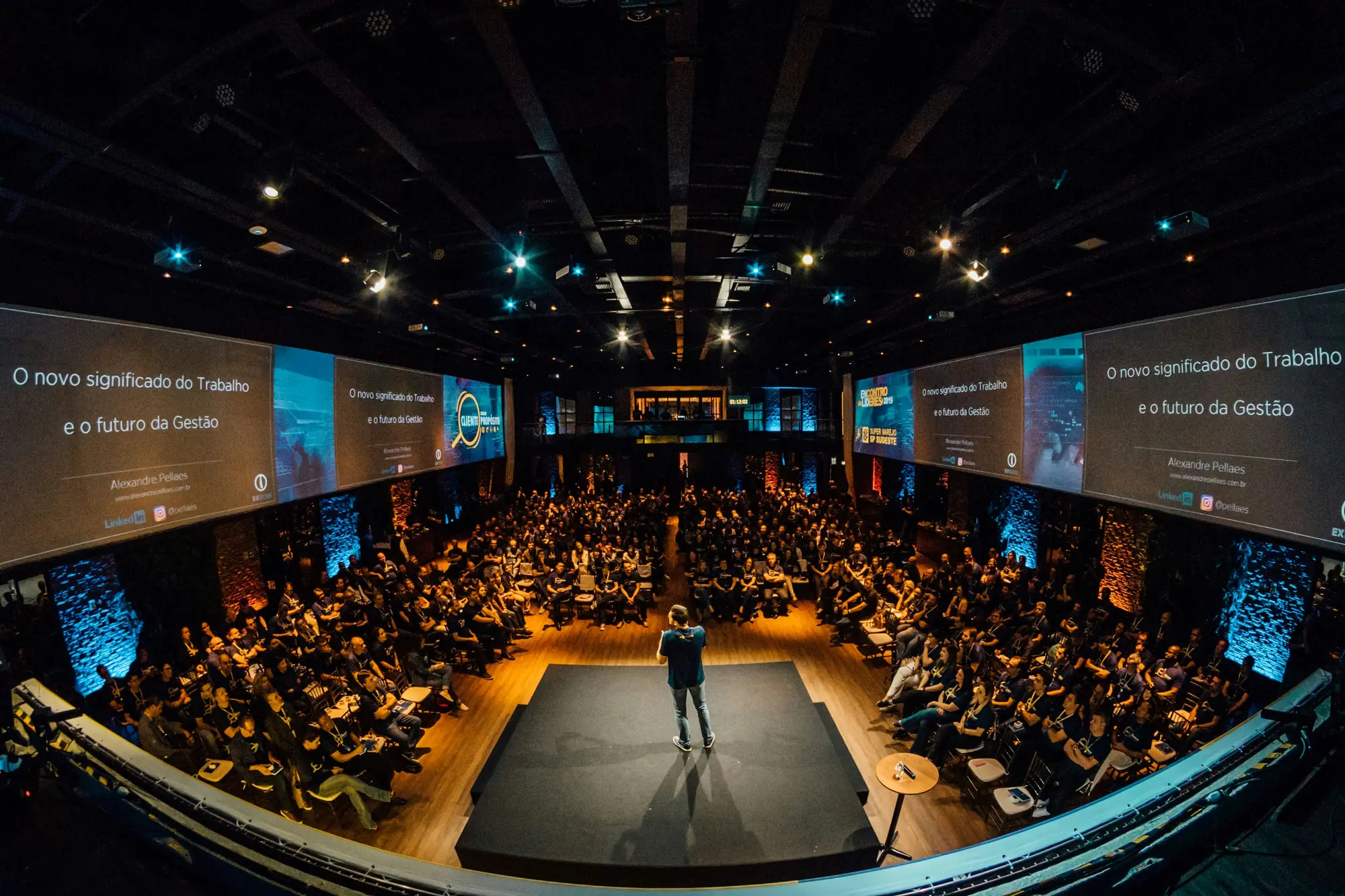
One aircraft carries the entire group, with a schedule arranged around your programme (our group charter missions).

The capacity allows the team, staff and supporters to travel together. We confirm the required space for sports equipment with the operator (sports charter).
Several versions of the 737 are operated in Europe. Availability still depends on the dates and season.
The route approaches its range with a full group. A stop or an aircraft with greater range may be required.
A CRJ1000 or Embraer 170 offers a more suitable capacity.
An Airbus A321 or two aircraft may provide a more suitable capacity.
Some 737-300 and -400 aircraft have been converted into freighters. We assess these aircraft with our cargo department.
We consider the Boeing 737 when a group exceeds 100 passengers on a medium-haul flight. Its capacity allows the group to travel on the same aircraft and according to one schedule.
We check the operator and its certifications, the age of the aircraft and its cabin configuration. We also confirm the baggage allowance and the services provided onboard.
On longer routes, available payload may be limited. We also check slots at coordinated airports and any required permits outside the European Union.
For fewer than 100 passengers, we compare the 737 with the CRJ1000 or Embraer 170. Above 160 passengers, we consider the Airbus A321. For long-haul flights, an A340 may be more suitable.
Depending on availability, we also compare the 737 Classic with newer Boeing 737-800 or 737 MAX aircraft.
We do more than find an available aircraft. From your first request to landing, our teams coordinate every stage of your charter.
Your dedicated broker remains your main point of contact throughout your journey, from the initial request to your arrival.
We compare aircraft and certified operators to recommend the solution best suited to your itinerary, requirements and budget.
Once your flight is confirmed, our Flight Preparation team coordinates the operational details required for a smooth journey.
The team oversees flight logistics, ground handling, catering, passenger requirements and other arrangements before departure.
Every flight is operated by a certified aircraft operator holding the licences and approvals required for the mission.
We review operators, aircraft and operational requirements to check that each proposed solution meets our safety and compliance standards.
Provide the dates, airports, passenger numbers and expected baggage. This information helps us determine which 737 version is suitable for your charter.
We contact operators and check the aircraft, airports and route feasibility. We then present the different options available.
Once the charter is confirmed, we organise each stage of the flight with the operator and airports until the group's return.
There is no fixed price. The cost depends on flight time, aircraft positioning, airport charges and any time spent on the ground. We prepare a quote after consulting operators for your dates.
In Boeing's reference configuration, the 737-400 accommodates 146 passengers in two classes or 159 in a single-class layout. Actual capacity depends on the operator's cabin configuration.
The 737-400 is a stretched version of the 737-300 and uses the same CFM56-3 engines. It provides around 25 additional seats and 8.7 m³ more baggage hold capacity.
With a full group, its range is approximately 3,500 to 4,000 km, depending on the version and payload. It is suitable for flights across Europe, North Africa and nearby destinations in the Middle East.
Yes. The number of cabin crew members depends on the aircraft's seating capacity. We confirm the onboard services before the flight is confirmed.
Yes. The Boeing 737 is suitable for teams travelling with staff and supporters. We confirm the available capacity for baggage and sports equipment with the operator.
Yes. Some Boeing 737-300 and -400 aircraft have been converted for cargo operations. Our cargo department checks available aircraft according to your shipment and route.
Yes. The 737-800 is widely available for group charter flights. The newer 737 MAX consumes less fuel per seat. We compare these versions with 737 Classic aircraft according to your dates, route and budget.
From private jet charters to commercial group flights and dedicated cargo operations, we deliver tailored air solutions for every mission, anywhere in the world.


