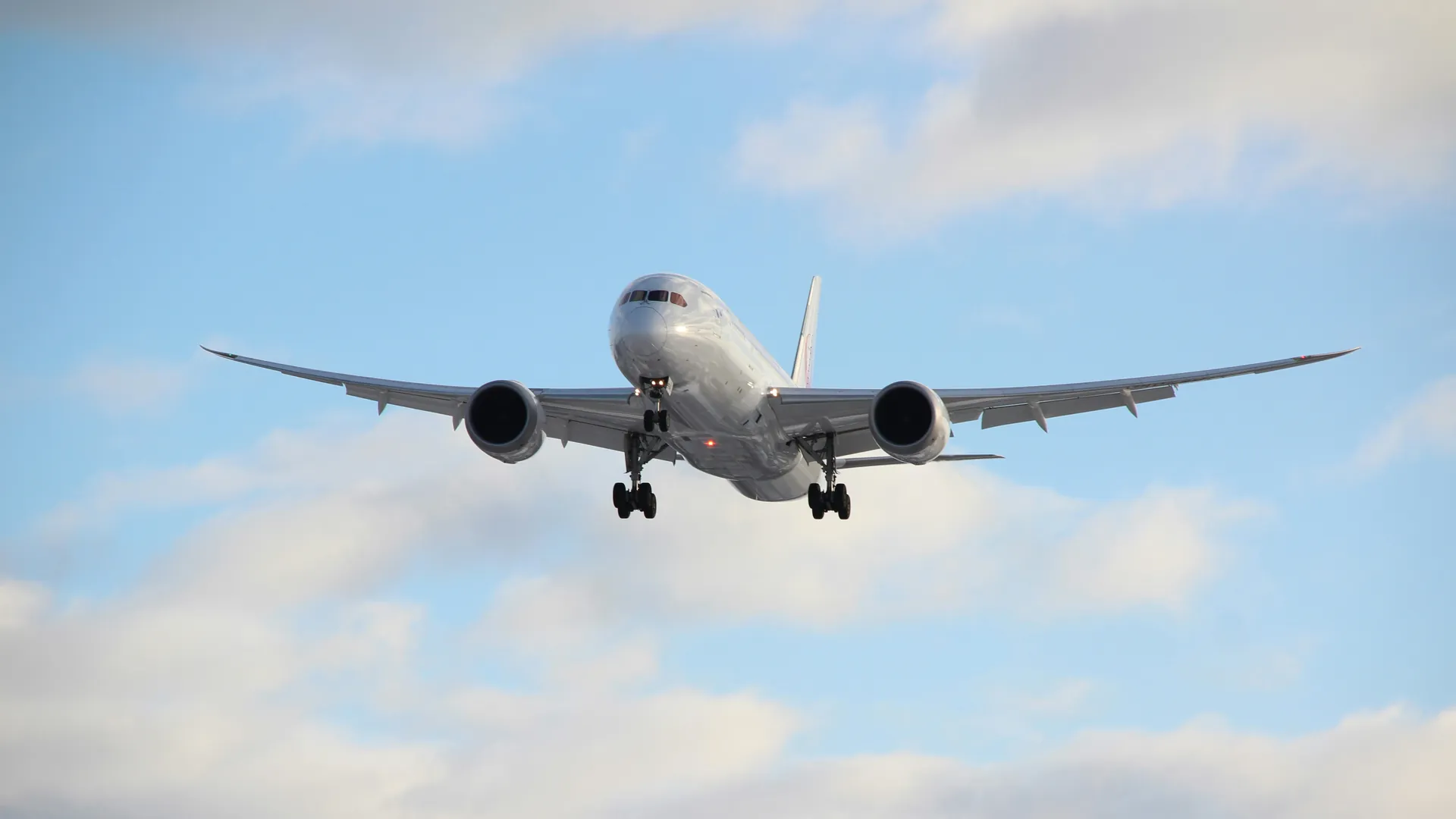

The Boeing 787-8 Dreamliner is the shortest long-haul aircraft in the 787 family. Boeing quotes 200–275 seats in two classes and a maximum range of approximately 14,820 km. It is powered by two GEnx-1B or Rolls-Royce Trent 1000 engines.
For charter operations, the 787-8 is particularly suited to flying 200–250 passengers nonstop over long intercontinental routes in a modern aircraft. It bridges the gap between smaller aircraft such as the Airbus A321 LR and larger wide-bodies including the A330 and 777-300ER.
At Artheau Aviation, we arrange Boeing 787-8 charters for intercontinental corporate events and sports travel. We source suitable aircraft, compare operators and coordinate the entire group flight.
Passengers
200–275 seats
Two classes, according to Boeing
Speed
≈ 900–920 km/h
Cruise speed
Range
≈ 14,820 km
Boeing maximum; lower at full payload
Cargo holds
≈ 137 m³
Maximum volume, according to Boeing
A Boeing 787-8 charter is quoted for the entire aircraft, irrespective of how many seats are occupied. Flight duration, positioning, airport fees, ground handling and the arrangements between outbound and return flights all influence the price.
For 200–250 passengers travelling a very long distance, a 787-8 can avoid a technical stop without requiring a larger aircraft. We compare available A330 and A350 options before recommending a solution.
Every quotation is prepared after consulting several operators. We clearly explain the services included and the factors that could affect the final price.
The 787-8 combines long intercontinental range with a cabin sized for medium-to-large groups, making it a flexible long-haul charter aircraft.
A medium-sized group on one flight without unnecessary seats on a larger wide-body.
Approximately 14,820 km, according to Boeing, enabling intercontinental travel subject to payload.
A newer-generation long-haul aircraft with a contemporary cabin.
Efficient boarding and onboard service, particularly on flights exceeding ten hours.
Its limitations: beyond approximately 275 passengers, a 777-300ER or Airbus A350 may be more suitable.
Boeing quotes a maximum range of approximately 14,820 km for the 787-8. A full passenger load and baggage can reduce achievable range. We ask the operator to validate each itinerary against payload, winds and diversion requirements.
From Paris Charles de Gaulle, the 787-8 can fly nonstop to Rio de Janeiro (approximately 9,180 km), Mexico City (9,200 km), Tokyo (9,710 km) or Singapore (10,720 km), subject to payload. London–Rio is approximately 9,250 km.
Great-circle distances calculated by Artheau Aviation for guidance only.
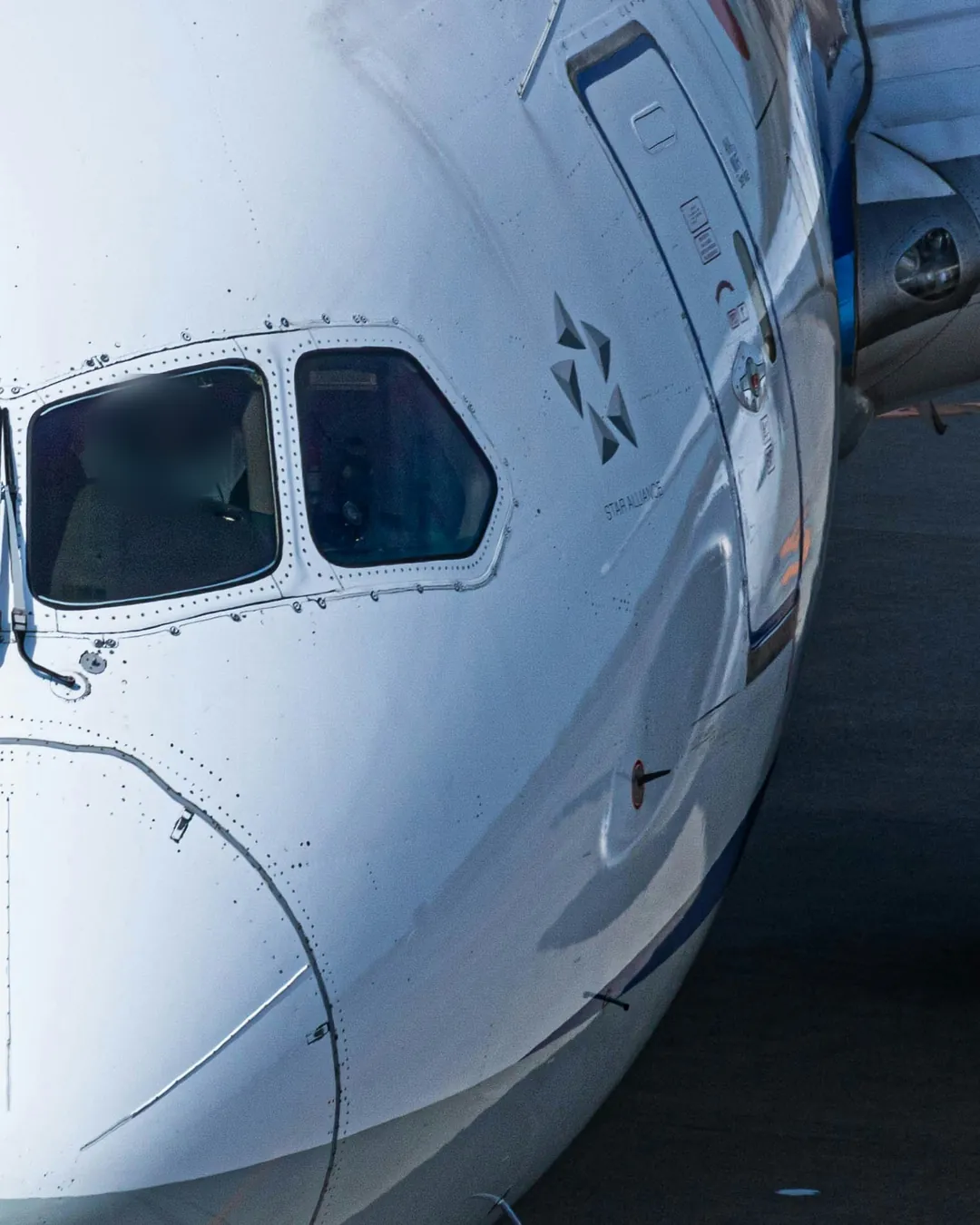
The figures below are published by the manufacturer. They vary according to the configuration selected by the operator.
| Specification | Boeing 787-8 |
|---|---|
| Seats | 200–275 (two classes) · up to 381 (evacuation limit) |
| Cruise speed | ≈ 900–920 km/h |
| Range | up to ≈ 14,820 km |
| Engines | 2 × GEnx-1B or Rolls-Royce Trent 1000 |
| Maximum take-off weight | 227,930 kg |
| Cargo-hold volume | ≈ 137 m³ |
| Fuel capacity | 126,206 l |
| Length / wingspan | 56.7 m / 60.1 m |
Other variants: 787-9, 250–325 seats and approximately 15,370 km; 787-10, 300–375 seats and approximately 13,890 km.
Sources: Boeing (787 page and Airplane Characteristics 787).
A chartered Boeing 787-8 generally accommodates 200–275 passengers, depending on the operator’s cabin layout. A two-class aircraft with business class at the front may have around 240 seats (242 in Boeing’s reference layout). Denser economy configurations can exceed 270 seats. The certified evacuation limit of 381 is not a typical commercial seating arrangement. When chartering, we match the available cabin to your group rather than selecting a theoretical seat count.
For corporate groups, a business-class cabin can be an important criterion. It allows executives and guests to sit at the front while everyone travels on the same aircraft.
The 787-8 provides approximately 137 m³ of hold volume, useful for long-haul luggage, presentation equipment or exhibition materials. Actual baggage allowances depend on the operator, take-off weight and fuel required. On very long flights, fuel can limit available payload. We check these factors before confirming baggage allowances.
| Mission type | Example | Why the 787-8 |
|---|---|---|
| Long-haul corporate event or incentive trip | Europe–South America; Europe–Asia | The whole group together on a nonstop flight. |
| Sports event or delegation | Team, staff and supporters | Medium-group capacity and intercontinental range. |
| Corporate trip with business class | Executives at the front, employees behind | Two-class cabins available from many operators. |
| Airline replacement flight (ACMI) | One-off or seasonal long-haul operation | Modern aircraft with competitive operating characteristics. |

Passenger numbers and the actual distance of the journey. The 787-8 makes sense when the group exceeds single-aisle capacity and the route is intercontinental; otherwise, a smaller aircraft may be more appropriate.

The exact cabin configuration, realistic baggage allowance given fuel requirements, and aircraft availability for both outbound and return flights.

Airport slots, crew rest on long sectors and aircraft positioning when the return flight is scheduled several days later.

Depending on group size, an Airbus A330 or Boeing 767-300ER may offer similar capacity; for larger groups, consider a 787-9 or 777-300ER.
In November 2023, a London-based technology company asked us to fly 269 employees to Rio de Janeiro and back. The client wanted the entire group to travel together, without connections.
The company wanted all its employees on the same nonstop London–Rio flight. Scheduled services would have split the group across multiple flights, often with connections.
Chartering kept everyone together, gave the client more control over timings and allowed a tailored onboard experience.
At approximately 9,250 km, London–Rio required a long-haul aircraft capable of carrying 269 passengers and their baggage nonstop. We selected a Boeing 787-8 with a sufficiently dense seating layout.
Its lower cabin altitude and higher humidity than many older aircraft also contribute to passenger comfort on flights lasting more than eleven hours.
Several logistical issues arose shortly before departure. We coordinated adjustments with the operator and airports to protect the planned schedule.
The client benefited from a single point of contact throughout preparation.
The group travelled together on nonstop services in both directions.
The mission followed the programme agreed with the client.
This charter demonstrates the 787-8’s suitability for corporate travel: enough seats for a large group, sufficient range for nonstop Europe–South America flights, and a comfortable cabin for overnight long-haul travel.
Tell us your travel dates, departure and arrival cities, passenger numbers and requirements (business class, catering or special baggage).
We contact operators offering a 787-8 or equivalent aircraft, compare cabin layouts and present suitable options with their operating constraints.
Once you approve the proposal, we coordinate the operator, airports, ground handling and catering through the group’s return.
We do more than find an available aircraft. From your first request to landing, our teams coordinate every stage of your charter.
Your dedicated broker remains your main point of contact throughout your journey, from the initial request to your arrival.
We compare aircraft and certified operators to recommend the solution best suited to your itinerary, requirements and budget.
Once your flight is confirmed, our Flight Preparation team coordinates the operational details required for a smooth journey.
The team oversees flight logistics, ground handling, catering, passenger requirements and other arrangements before departure.
Every flight is operated by a certified aircraft operator holding the licences and approvals required for the mission.
We review operators, aircraft and operational requirements to check that each proposed solution meets our safety and compliance standards.
Pricing depends mainly on flight duration, aircraft availability and positioning, airport charges and ground time when the return is later. There is no fixed rate: each request is quoted with operators.
Approximately 200–275, depending on the operator’s configuration, with a reference two-class layout of around 240 seats.
Boeing quotes up to approximately 14,820 km. Actual mission range depends on payload, winds and regulatory fuel reserves. London–Rio de Janeiro, at approximately 9,250 km, is within its capabilities subject to operational confirmation.
The 787-8 is the shortest variant. The longer 787-9 carries more passengers over a comparable distance; the even longer 787-10 prioritises seating capacity over range.
Yes. Many operators use two-class configurations. The size and availability of business class depend on the specific aircraft, which we verify during sourcing.
Several weeks ahead is advisable, especially in peak season. Last-minute charters remain possible depending on operator availability.
Yes. It may remain at the destination or fly elsewhere and return to collect the group. We compare the operating and ground-time costs.
From private jet charters to commercial group flights and dedicated cargo operations, we deliver tailored air solutions for every mission, anywhere in the world.