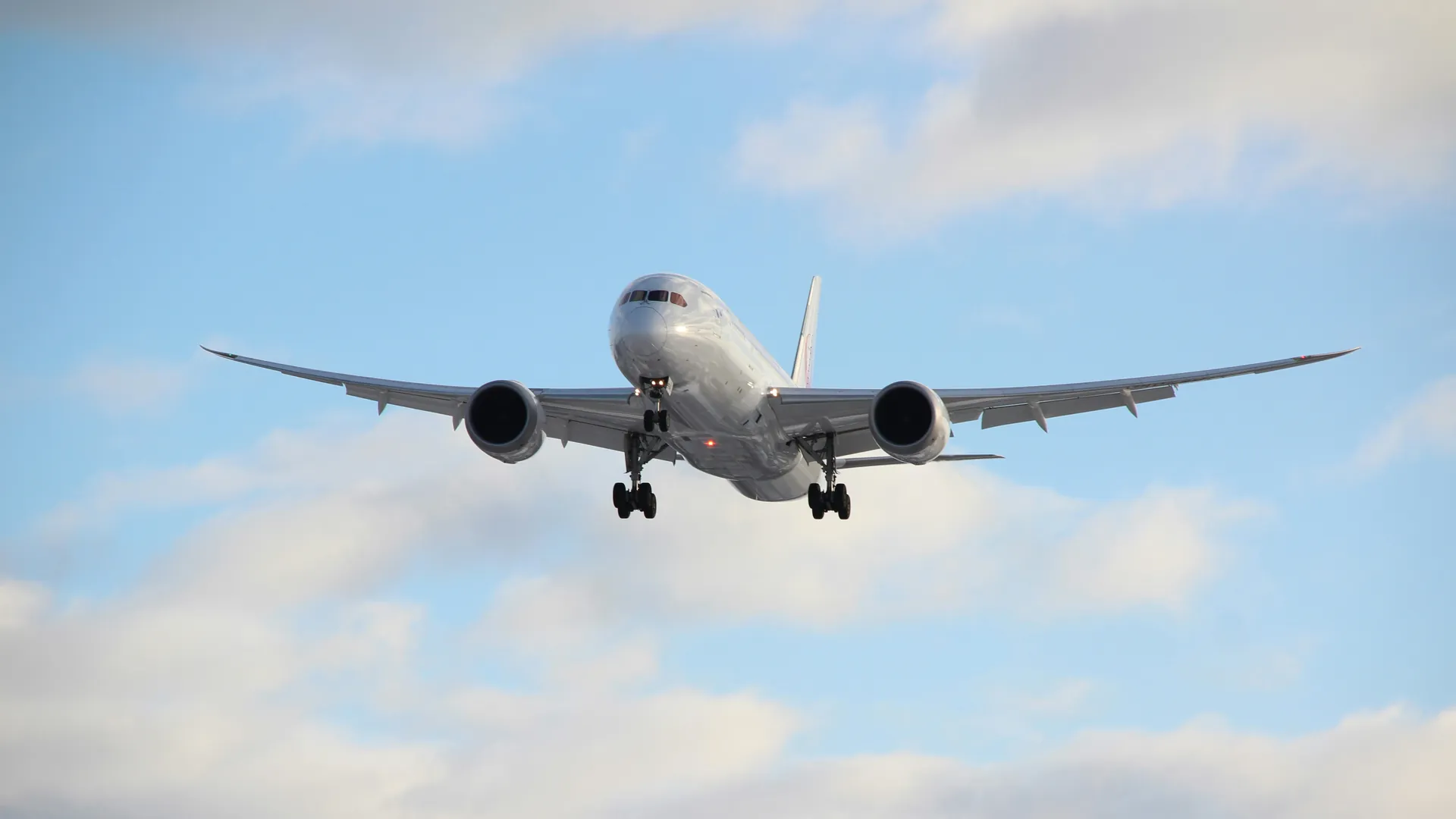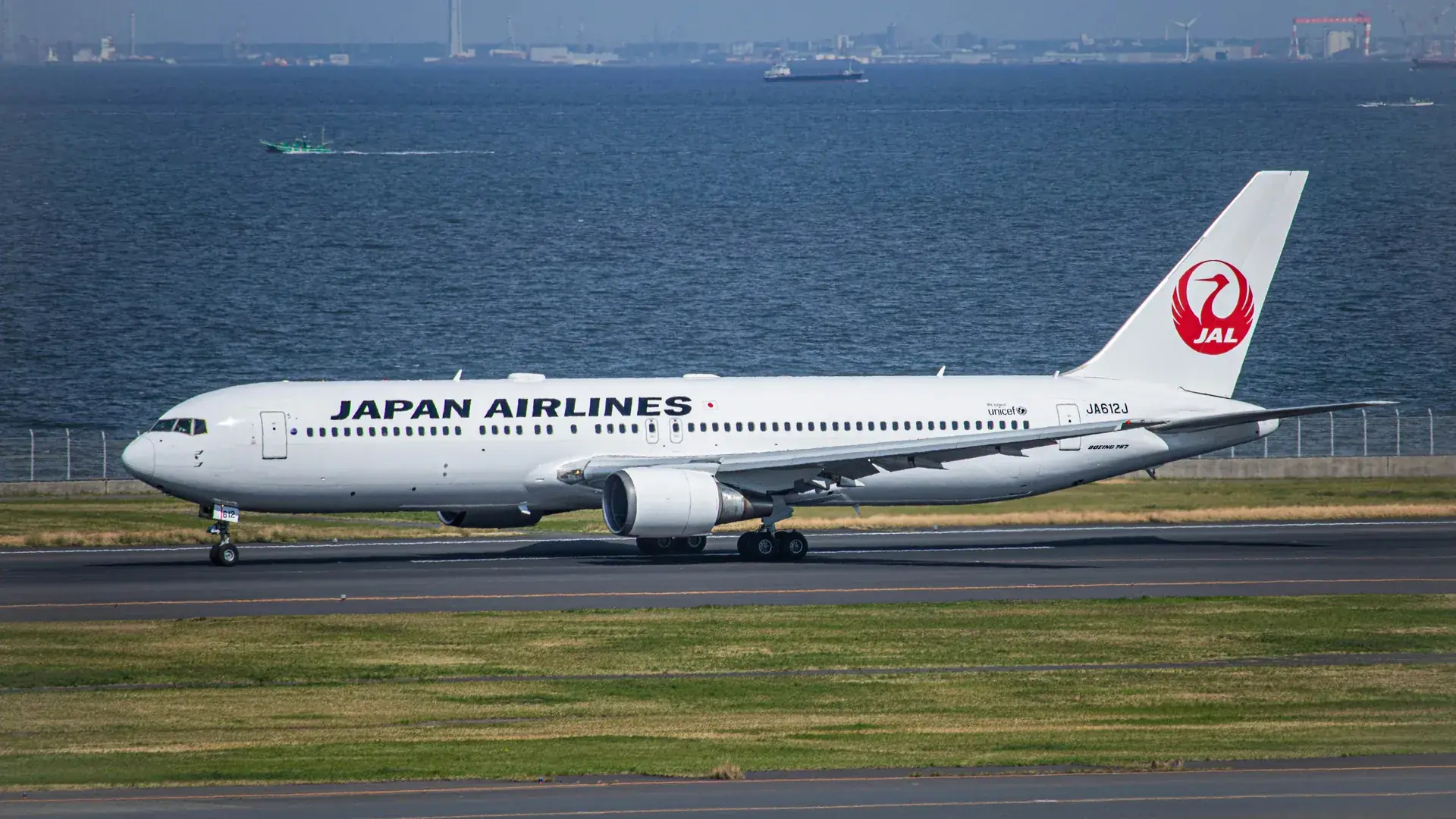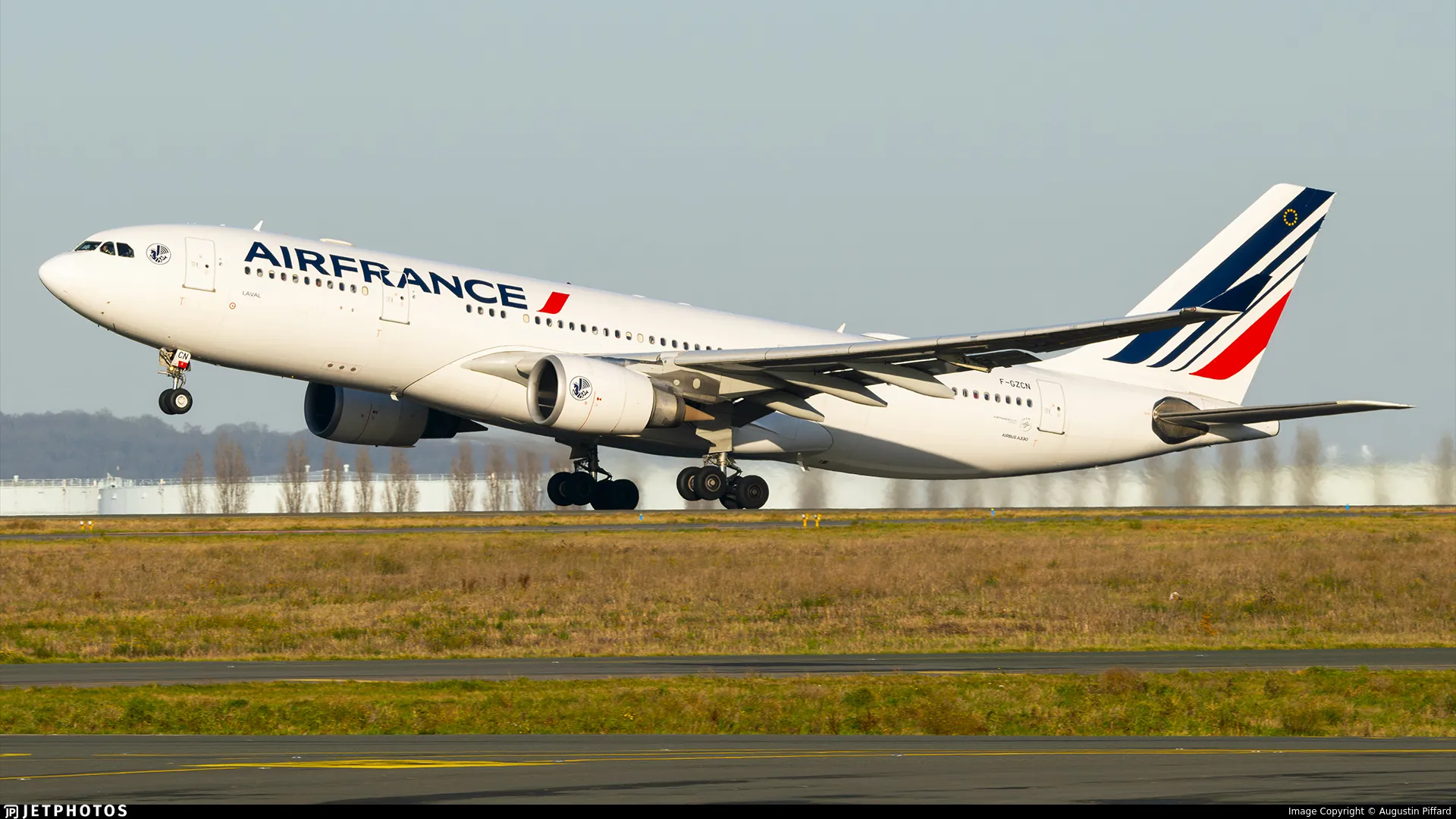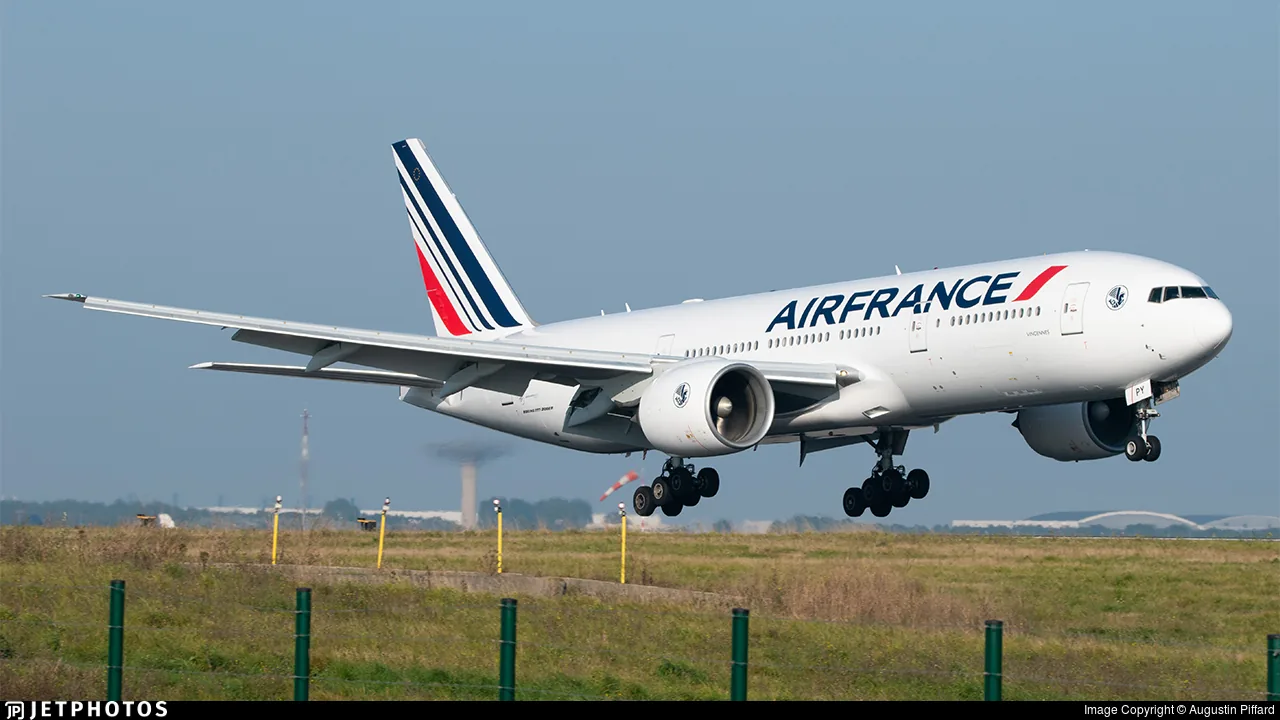

The Boeing 777-300ER is the extended-range development of the original 777-300, sharing its 73.9 m fuselage. Boeing quotes 350–425 seats in two classes and a maximum range of approximately 13,890 km. Its two GE90 engines are among the most powerful aircraft engines in commercial service.
For charter missions, the 777-300ER addresses needs beyond the typical capacity of an A330 or 787: transporting more than 300 passengers intercontinentally or urgently evacuating large groups in a single rotation. It sits below the Airbus A380 and Boeing 747-400 in overall capacity.
At Artheau Aviation, we arrange Boeing 777 charters for long-haul group travel, sports delegations and repatriation operations. We identify available aircraft, assess operators and coordinate the entire mission.
Passengers
350–425 seats
Two classes, according to Boeing
Speed
≈ 900–920 km/h
Cruise speed
Range
≈ 13,890 km
Boeing maximum; lower at full payload
Cargo holds
≈ 214 m³
Cargo-hold volume, according to Boeing
The charter price covers the entire Boeing 777-300ER, irrespective of occupied seats. Flight time, aircraft positioning, airport charges, ground handling and the outbound/return operating pattern affect the quotation. Additional insurance costs may apply to certain higher-risk destinations, subject to operator confirmation.
When fully occupied, a 777-300ER may offer a lower cost per seat than chartering two smaller aircraft. We compare it with the Airbus A350 and Boeing 747-400 according to group size and availability.
We request quotations from several operators and explain the included services and possible price variations before you commit.
The 777-300ER combines high passenger capacity with intercontinental range, making it a versatile wide-body choice for exceptionally large groups.
350–425 seats in two classes, according to Boeing, for a very large group on one flight.
Approximately 13,890 km according to Boeing, subject to payload and operating conditions.
Approximately 214 m³, according to Boeing, for baggage, equipment or emergency supplies.
Many airlines operate the type, creating potential charter sourcing options.
Its limitations: for fewer than 300 passengers, an A330 or 787-8 is often better sized. Some smaller airports cannot accommodate the aircraft.
Boeing quotes a maximum range of approximately 13,890 km for the 777-300ER. Actual range may be lower with a full passenger load and baggage. For every charter, we ask the operator to validate payload, prevailing winds and diversion-airport requirements.
From Paris Charles de Gaulle, the 777-300ER can serve Los Angeles (approximately 9,100 km), São Paulo (9,410 km), Tokyo (9,710 km) or Singapore (10,720 km) nonstop, subject to payload and operational conditions.
Great-circle distances calculated by Artheau Aviation for guidance only.

The figures below are published by the manufacturer. They vary according to the configuration selected by the operator.
| Specification | Boeing 777-300 | Boeing 777-300ER |
|---|---|---|
| Seats (Boeing reference) | 368 (three classes)–451 (two classes) | 350–425 (two classes) |
| Cruise speed | ≈ 900–920 km/h | ≈ 900–920 km/h |
| Range | ≈ 11,100 km | up to ≈ 13,890 km |
| Engines | 2 × GE90-92B/-98B, Pratt & Whitney PW4090/4098 or Rolls-Royce Trent 890/898 | 2 × GE90-115B |
| Maximum take-off weight | up to 299,370 kg | 351,534 kg |
| Cargo-hold volume | ≈ 214 m³ | ≈ 214 m³ |
| Fuel capacity | 169,200 l | 181,283 l |
| Length / wingspan | 73.9 m / 60.9 m | 73.9 m / 64.8 m |
| Entry into service | 1998 | 2004 |
In summary, both variants share the same fuselage and cargo-hold volume. The 777-300ER offers approximately 2,800 km of additional range thanks to more powerful engines, a wider wingspan and a higher maximum take-off weight. The 777-300ER is much more common in the charter market; the original 777-300 can suit shorter long-haul sectors, depending on payload.
According to Boeing, the 777-300ER accommodates 350–425 passengers in two classes. Boeing’s airport-planning document also includes reference layouts with 339 seats in two classes and 370 in three classes. For charter operations, seating depends on the aircraft available; we provide its exact cabin plan with every proposal.
The twin-aisle layout supports efficient boarding and disembarkation, particularly useful when ground time is limited.
Boeing quotes approximately 214 m³ of cargo-hold volume for the 777-300ER. This can accommodate luggage for a very large group, equipment or humanitarian supplies, within payload limits. We confirm permitted weight and volume with the operator for each mission.
| Charter mission | 777-300ER suitability | Our assessment |
|---|---|---|
| Repatriation or evacuation | Highly suitable | A large number of people transported on one long-haul rotation. |
| Long-haul conference or convention | Highly suitable | More than 300 participants together on one aircraft, nonstop where feasible. |
| Sports team or supporter travel | Suitable | Very high capacity for international sporting events. |
| Fewer than 300 passengers | Often oversized | An A330 or 787-8 may be better sized. |
| More than 425 passengers on one flight | Requires assessment | Consider an A380 or two aircraft operating in parallel. |

For over 300 passengers on an intercontinental journey or urgent high-capacity transport.

Cabin configuration, achievable range, airport compatibility and immediate aircraft and crew availability.

Overflight and landing permissions, slots, handling and crew duty time, sometimes within hours.
Following a conflict in a high-risk region, a euro-area country urgently needed to bring its citizens home. We supported the relevant government departments and arranged a Boeing 777 charter for the operation. For confidentiality, we do not identify the country or region.
Conditions on the ground were changing rapidly. We needed a high-capacity aircraft, an available crew and an operator able to serve a sensitive destination.
In this type of operation, every minute saved can matter.
The Boeing 777 enabled a large number of citizens and their baggage to return on one long-haul rotation.
We selected the aircraft and operator according to seating capacity, range and the practical conditions of the mission.
The available window for landing, boarding and departure was extremely short. The flight therefore required rapid, carefully coordinated preparation.
We managed permissions, airport slots, ground handling and passenger lists in parallel to meet the operational deadline.
We coordinated the aviation operation directly with the country’s government departments, which led the evacuation.
Continuous communication between the client, operator and airports enabled the flight to be completed.
This mission demonstrates the value of an air charter broker: sourcing the right aircraft quickly, managing a narrow operating window and coordinating every stakeholder during a sensitive operation.
Share route, dates, passenger numbers and baggage volume. Flag emergencies immediately so we can begin sourcing.
We consult operators, check aircraft, crew and slot availability, then present suitable options.
After confirmation, we coordinate operators, airports, permissions and passenger lists. Your main contact remains available until arrival.
We do more than find an available aircraft. From your first request to landing, our teams coordinate every stage of your charter.
Your dedicated broker remains your main point of contact throughout your journey, from the initial request to your arrival.
We compare aircraft and certified operators to recommend the solution best suited to your itinerary, requirements and budget.
Once your flight is confirmed, our Flight Preparation team coordinates the operational details required for a smooth journey.
The team oversees flight logistics, ground handling, catering, passenger requirements and other arrangements before departure.
Every flight is operated by a certified aircraft operator holding the licences and approvals required for the mission.
We review operators, aircraft and operational requirements to check that each proposed solution meets our safety and compliance standards.
We quote the entire aircraft. Flight duration, positioning, airport charges and any mission-specific restrictions determine the price.
Boeing quotes 350–425 seats in two classes. We confirm the actual configuration in every proposal.
Both share a 73.9 m fuselage and a similar cabin. The extended-range 777-300ER has more powerful GE90-115B engines, a wider wingspan (64.8 m versus 60.9 m) and a higher maximum take-off weight (351,534 kg versus up to 299,370 kg). Its range reaches approximately 13,890 km, compared with approximately 11,100 km for the original 777-300. The 777-300ER is now more commonly available for charter.
Yes. We supported government departments from a European country in repatriating citizens from a conflict area aboard a Boeing 777.
This depends on aircraft availability and permissions. For urgent requests, we begin sourcing options immediately.
The A350 is newer, while the 777-300ER generally offers more seats. Group size and available aircraft determine the best fit.
As soon as possible for planned flights, because relatively few wide-body aircraft are available for charter.
From private jet charters to commercial group flights and dedicated cargo operations, we deliver tailored air solutions for every mission, anywhere in the world.