
When can an alternative to a full charter be more suitable?
Chartering an entire aircraft provides significant flexibility, but it is not necessarily the most suitable solution for every journey or logistics operation. Depending on passenger numbers, route, schedule, cargo volume and the level of flexibility required, other solutions may meet the requirement more efficiently.
For passenger travel, scheduled flights are the most obvious alternative. When a direct service exists, its schedule fits the programme and sufficient seats are available, purchasing airline tickets can be more economical than chartering an entire aircraft.
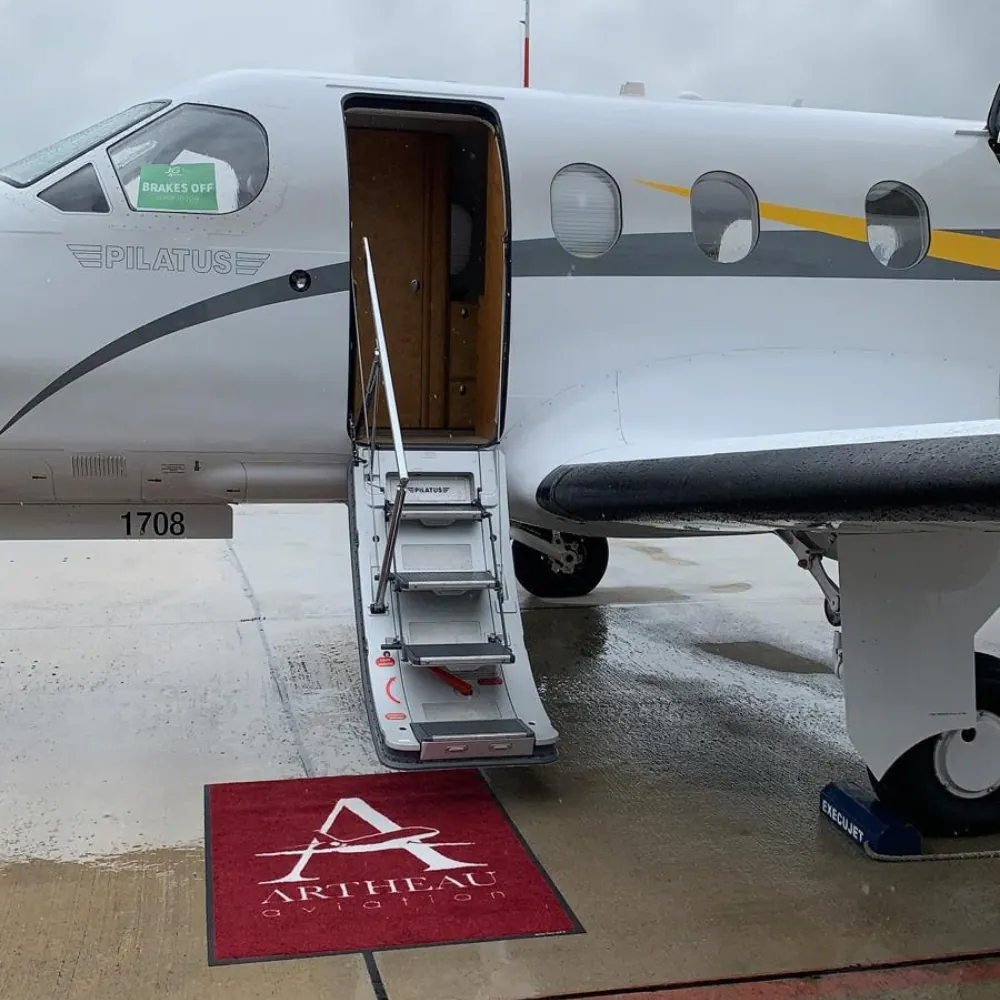
The same principle applies to business aviation. On routes with excellent rail connections, travelling by train can sometimes be simpler and less expensive than chartering a private jet.
For journeys between Paris and Lyon, Paris and Marseille or Paris and London, for example, the relevance of a private jet depends heavily on the mission. Passenger numbers, departure and final destination, schedule requirements, the need to complete a return journey within the same day and the organisation of multiple meetings should all be considered. In some situations, we may therefore recommend that clients consider rail travel when it meets their requirements more efficiently. The final decision always remains with the client. Other priorities may justify using a private jet, including confidentiality, greater control over the schedule, travelling with several colleagues or incorporating the flight into a multi-sector itinerary.
The same assessment applies to group travel. If several dozen passengers need to reach a destination served by multiple daily flights and sufficient scheduled capacity exists at suitable times, chartering an entire commercial aircraft may not be necessary.
Conversely, when the group needs to travel together, follow a precise programme, carry significant baggage or equipment, depart immediately after an event or reach a destination that is difficult to access on scheduled services, chartering can offer a very different level of value.
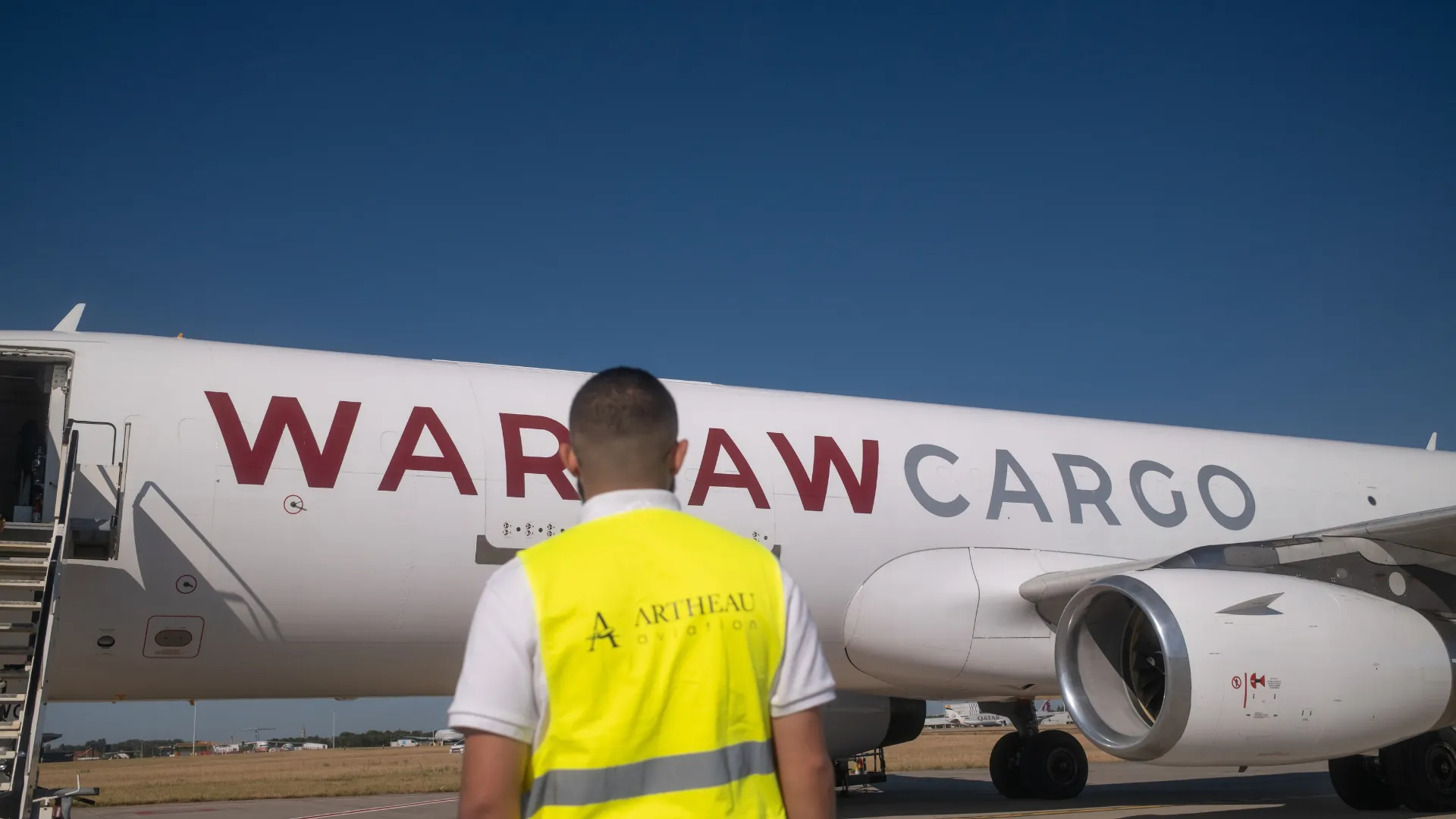
For air cargo, several levels of capacity can also be considered. A full charter, where an aircraft is dedicated entirely to one operation, is not always required.
Artheau Aviation can also source part-charter solutions. This involves using part of the capacity of an aircraft that has already been chartered or sharing available charter capacity between different shipments. Where suitable capacity is available and compatible with the cargo, this can help distribute part of the operating cost without requiring an entire aircraft.
Scheduled air freight is another option. For a limited number of pallets or standard cargo that does not require a dedicated aircraft or specific flight programme, available capacity on scheduled services may be more economical.
The choice can therefore involve scheduled air freight, part-charter or full charter. Weight, volume, dimensions, type of cargo, routing, urgency and loading requirements all contribute to determining which option should be considered.
The air charter broker's role is to assess these parameters before sourcing a solution.
The objective is not systematically to recommend a fully dedicated aircraft, but to identify a solution consistent with the actual requirements of the mission.
Why should the cost of a charter be compared with the actual requirements?
Cost is naturally one of the main factors in determining whether chartering is appropriate. However, comparing only the price of a charter with the cost of airline tickets can provide an incomplete picture of the operation.
With a full charter, the client reserves the aircraft's capacity for the flight. Part of that capacity may therefore remain unused. Chartering a 150-seat aircraft for a much smaller group, for example, may be disproportionate if smaller aircraft or suitable scheduled services are available.
The same principle applies to business aviation. For a passenger travelling between two major cities with frequent scheduled services and no significant time constraints, the cost of a private jet may be difficult to justify on transportation requirements alone.
In cargo, deploying an entire freighter for a relatively small shipment may also be unnecessary when the goods can travel on scheduled cargo capacity or an available part-charter.
However, the price of the flight does not always represent the total cost of the mission.
For a group of 100 passengers, ground transfers, potential hotel nights, connections, splitting passengers across several flights and different arrival times may also need to be considered.
For a professional sports team, arriving several hours earlier or departing the following day can affect accommodation, ground transportation, player recovery and the organisation of the entire delegation.
For a company, the time of executives and employees can also be part of the equation. A direct flight organised around their meetings may eliminate connections and additional ground transportation.
For air cargo, the concept of total cost can be even more significant. The price of a charter needs to be considered alongside the value of the shipment, the urgency of delivery and the potential consequences of a delay. An industrial component required to prevent a production line from stopping does not follow the same economic logic as goods that can arrive several days later.
The analysis should therefore not focus exclusively on identifying the lowest air transport price. It should consider the overall cost of each scenario and the operational constraints that each option can, or cannot, resolve.

What constraints can make an aircraft charter less suitable?
The flexibility offered by air charter remains subject to aircraft availability and operational constraints. A request can be technically possible without necessarily representing the most suitable solution under the required conditions.
Aircraft location is one factor. If no suitable aircraft is positioned close to the departure airport, the operator may need to reposition an aircraft before performing the requested flight. This additional sector can significantly affect the cost of the operation.
Availability can also become more limited during periods of high demand, including major events, holidays, sporting competitions and international exhibitions. An aircraft matching the exact passenger requirement may therefore no longer be available.
In these circumstances, the only available solution may sometimes provide significantly more capacity than required. Transporting 50 passengers on an aircraft with substantially more seats remains technically possible, but the additional cost may reduce the economic relevance of chartering.
Airports and schedules can introduce further constraints. Slot availability, airport opening hours, local restrictions, parking capacity, ground handling services and aircraft compatibility can all affect the programme initially requested.
In business aviation, highly specific requirements can also considerably reduce the number of available options, including a particular aircraft category, cabin requirement, very narrow departure window, multiple sectors or the need to reposition an aircraft from another region.
For cargo operations, the limitation may come from the shipment itself. Dimensions, individual piece weight, cargo height, required loading equipment or applicable regulations can significantly reduce the number of aircraft capable of performing the mission.
Aircraft availability alone therefore does not determine whether a charter is appropriate. Positioning, cost, aircraft characteristics and the wider operational requirements need to be considered together.
How do you determine whether air charter is genuinely suitable for your requirements?
Before searching for an aircraft, the mission needs to be understood in detail. This is one of the core functions of an air charter broker.
For passenger travel, the assessment includes passenger numbers, preferred airports, genuinely critical timings, baggage, required services and whether the entire group needs to travel together.
Understanding the purpose of the journey is equally important. A business meeting, corporate event, sports competition or confidential trip can involve very different requirements.
The broker can then compare the requirement with the solutions available on the market.
For group travel, this may lead to sourcing a chartered commercial aircraft, but it may also reveal sufficient capacity on a suitable scheduled service. In business aviation, a private jet can generate substantial time savings on certain routes, while rail travel may remain the simplest solution on others.
For cargo, the assessment begins with precise shipment characteristics: weight, dimensions, volume, type of goods, delivery deadline, origin, destination and loading requirements. Depending on these factors, scheduled air freight, part-charter or full charter can be considered.
This process also helps avoid oversizing the solution. The aircraft offering the greatest capacity or flexibility is not necessarily the aircraft that best matches the requirement.
Conversely, the lowest price does not automatically represent the most appropriate solution when connections, transfers, delays or additional operational constraints need to be considered.
Artheau Aviation's role is to support this assessment, source available options from operators and present solutions that correspond to the client's requirements.
The final decision remains with the client. Some prioritise cost, while others place greater importance on time, flexibility, confidentiality, logistical simplicity or control over the programme.
The relevance of chartering should therefore always be assessed in the context of the complete mission. In some situations, a fully dedicated aircraft is the most appropriate solution. In others, a scheduled service, part-charter or ground transportation may meet the requirement more efficiently.
Which solution is right for your mission?
Private jet, group travel or air cargo: share your requirements with us. Artheau Aviation assesses your constraints and searches for a solution suited to your route, schedule and priorities.
FAQ
No. The relevance of a charter depends on the mission. Scheduled flights, rail travel or, for cargo, scheduled freight and part-charter solutions may be more suitable when they meet the client's capacity, timing and operational requirements.
There is no universal threshold. The answer depends on the route, passenger numbers, available fares, schedules, baggage, ground transfers and whether the group needs to travel together. Two groups with the same number of passengers can therefore require very different transport solutions.
With a full charter, the aircraft is chartered entirely for the operation. A part-charter uses only part of available charter capacity, allowing that capacity to be shared with other shipments. It can be relevant when the cargo volume does not justify a full aircraft, subject to available capacity and cargo compatibility.
Yes. An air charter broker first needs to understand the requirement and assess the available solutions. When rail travel, a scheduled flight or another option meets the mission more efficiently, that alternative can be presented to the client. The client then decides according to priorities such as cost, time, flexibility and confidentiality.