

%20(2).webp)

New York is one of the most requested long‑range routes in business aviation between Europe and the United States. Missions are often driven by urgency: board meetings, investor roadshows, legal or financial operations, and multi‑leg itineraries across the East Coast.
The city’s density leaves little room for approximation. The goal is simple: protect confidentiality and keep full control of timing. Corporate travel typically centers around Midtown, Hudson Yards, Lower Manhattan and the Financial District. On the private side, many passengers extend to the Hamptons, Greenwich, Westchester or the Hudson Valley.
New York’s calendar directly impacts charter availability. Fashion Week, the UN General Assembly, major industry weeks, year‑end periods and summer departures to the Hamptons create peaks: fewer aircraft choices, tighter slot windows and, at times, required repositioning. Planning ahead improves your ability to secure the right category of aircraft and a realistic arrival window.
Three airports are commonly used for private jet access to New York: Teterboro (TEB/KTEB), the reference for efficient access to Manhattan; Westchester County (HPN/KHPN), often relevant for Westchester, Greenwich and the north of the city; and John F. Kennedy (JFK/KJFK), frequently preferred for large‑cabin aircraft and certain international procedures. The right choice depends on the mission: aircraft performance, runway and noise constraints, operating hours, weather, parking and your final address.
Teterboro is often the most direct option, but it is not always the best one when demand is high or conditions change on the day of operation. The key is to think door‑to‑door and secure a plan that remains executable. When needed, we compare nearby alternates to preserve the logic of the itinerary.
Artheau Aviation is an independent aircraft charter broker — we do not operate our own fleet. We compare aircraft that are actually available on the charter market, confirm operational feasibility with operators (range, crew duty limits, slots, turnaround times) and present a clear recommendation based on real availability.
Which airports should you use for a private jet to New York?
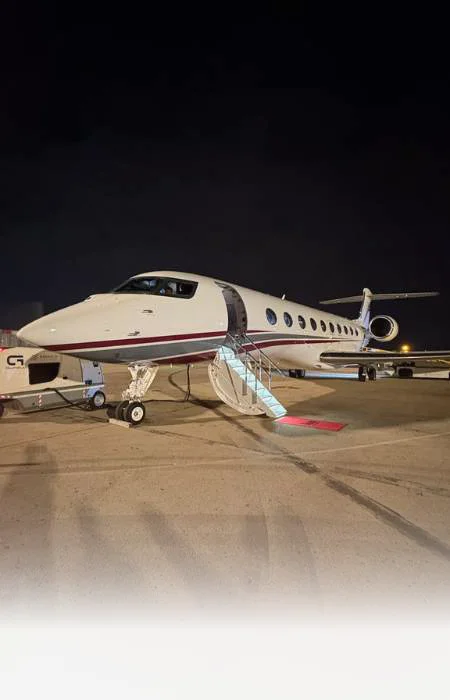
Teterboro Airport (TEB/KTEB)
Located in New Jersey, Teterboro is one of the closest business‑aviation airports to Manhattan. The airfield is structured for private operations, with multiple dedicated terminals and efficient passenger flows. For Midtown, Hudson Yards or the West Side, it is often one of the best options for door‑to‑door time.
Teterboro accommodates a wide range of business jets, from light aircraft to large‑cabin types, subject to performance requirements and parking availability. Demand concentrates on weekdays and during major events, which can reduce schedule flexibility. Local noise rules and day‑of constraints (weather, congestion) also influence what is realistically possible. We confirm these parameters with operators before any final confirmation.
When timing control is the priority, same‑day returns, dense agendas, multi‑leg routing across the Northeast, Teterboro remains the most commonly selected option. If availability is limited, we propose coherent alternatives to keep the plan realistic on the day of flight.
Westchester County Airport (HPN/KHPN)
Westchester County, in White Plains, sits north of New York City. It is often selected when meetings are in Westchester, Greenwich or Connecticut, or when a calmer arrival is preferred compared to the closest Manhattan options. Dedicated terminals and generally lower movement volume can make the experience more predictable, especially for early departures.
The runway and facilities accommodate a broad range of business jets, from light types to many large‑cabin aircraft, depending on performance and parking availability. Operating hours, local noise rules and weather shape the workable windows. We confirm feasibility with the operator before locking the itinerary.
Driving time to Manhattan varies significantly by time of day and neighborhood. However, HPN can be very efficient for the North Shore, the I‑95 corridor and residential stays outside the city. It is also a relevant alternative when Teterboro is constrained, provided the door‑to‑door logic remains favorable.
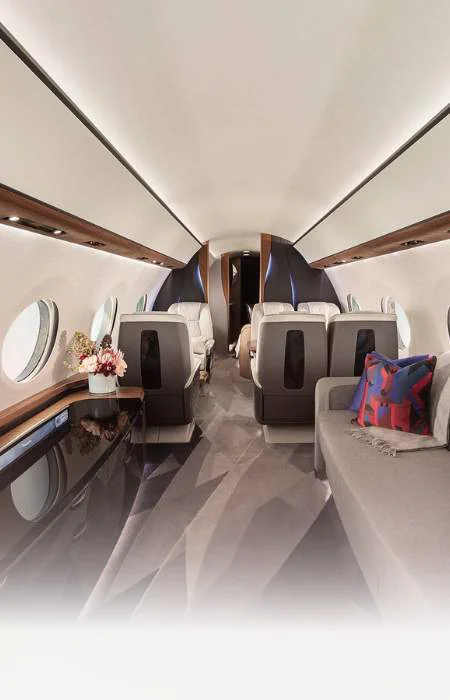

John F. Kennedy International Airport (JFK/KJFK)
John F. Kennedy is a major intercontinental hub and regularly serves as an entry point for long‑range private flights to New York. Runway length and airport infrastructure make it a strong option for large‑cabin aircraft and missions where performance margins matter. It can also be relevant when international procedures require a full airport environment.
JFK operates in a dense commercial environment. Taxi times, ground coordination and parking access can vary by schedule and daily load. Private terminals exist, but access conditions depend on the slot and the operational setup. We confirm with the operator what is realistically workable for your aircraft and timeline.
The drive to Manhattan is typically longer than from Teterboro or Westchester, so the option must be evaluated through a door‑to‑door lens. For certain aircraft categories, certain distances and certain operational constraints, JFK remains the most coherent choice.
Private Jet Flight Prices From This Destination
Luxurious experiences
%20(1).webp)
Events and peak demand weeks
%20-%20Copie.webp)
Northeast corridor roadshows
%20-%20Copie.webp)
Hamptons and Long Island stays
.webp)
Finance meetings in Manhattan
Which aircraft category should you choose for New York?
The right aircraft category for New York depends first on your itinerary, passenger count and how you intend to use the cabin (work on board, rest, baggage volume). On shorter legs within the Northeast, Light and Super Light Jets (e.g., Citation CJ3+, Phenom 300E) provide an efficient solution for 6 to 8 passengers, with quick turnarounds.
For longer domestic stages or increased comfort, Super Midsize and Large Cabin aircraft offer more space, stability and range (e.g., Challenger 350/3500, Citation Longitude, Falcon 2000). Selection depends on distance, cabin expectations and what is actually available at the time of request.
For transatlantic missions from Europe, a Long Range aircraft is typically required for a non‑stop flight, with a cabin that supports rest (e.g., Falcon 8X, Gulfstream G650ER, Global 7500). Crew duty limits, weather and the airport choice (TEB, HPN, JFK) can influence the most relevant option.
Artheau Aviation compares the charter market and provides a short, argued selection, integrating operational constraints (slots, parking, repositioning) so that the recommendation remains realistic from quote to wheels‑up.

Why choose Arteau Aviation?

12 years of international experience

Carbon offset & sustainable fuel

VIP client support

Strict international standards

Absolute discretion on every flight

Fast and tailored solutions
FAQ
Teterboro (TEB/KTEB) is the most commonly used business‑aviation airport for New York, with infrastructure designed for private operations and often efficient access to Manhattan.
Westchester County (HPN/KHPN) can be a relevant alternative for Westchester, Greenwich and the north of Manhattan, particularly when the door‑to‑door logic is more favorable or when Teterboro is constrained.
The best choice depends on your destination neighborhood, time window and aircraft category.
Teterboro can accommodate a wide range of business jets, but heavy‑jet suitability depends on the aircraft, configuration and day‑of operational constraints. Required performance (takeoff/landing distances), weather, parking and local restrictions are decisive.
For many intercontinental missions, JFK is more often selected due to its infrastructure and performance margins. We confirm feasibility with the operator before locking the airport.
New York can sometimes be arranged on short notice, subject to charter market availability and airport constraints. Planning ahead improves choice, especially for long‑range aircraft and high‑demand periods (UNGA, Fashion Week, year‑end, summer).
If your agenda is timing‑sensitive, share constraints as early as possible. It allows us to compare options, confirm operational feasibility and secure a plan that remains realistic on the day of flight.
.jpg)


.webp)
.webp)
.webp)
.webp)
.webp)

.webp)



.jpg)